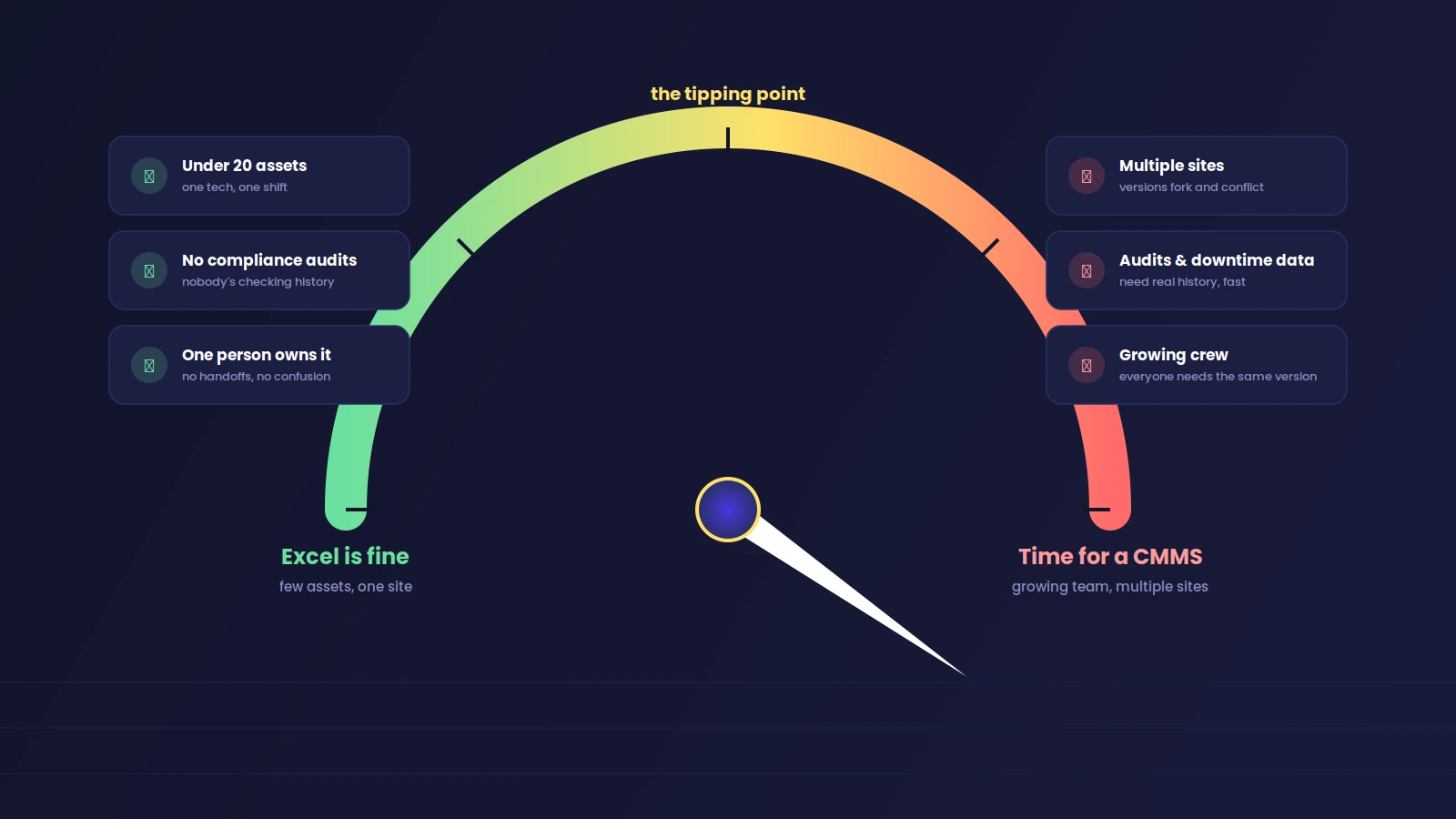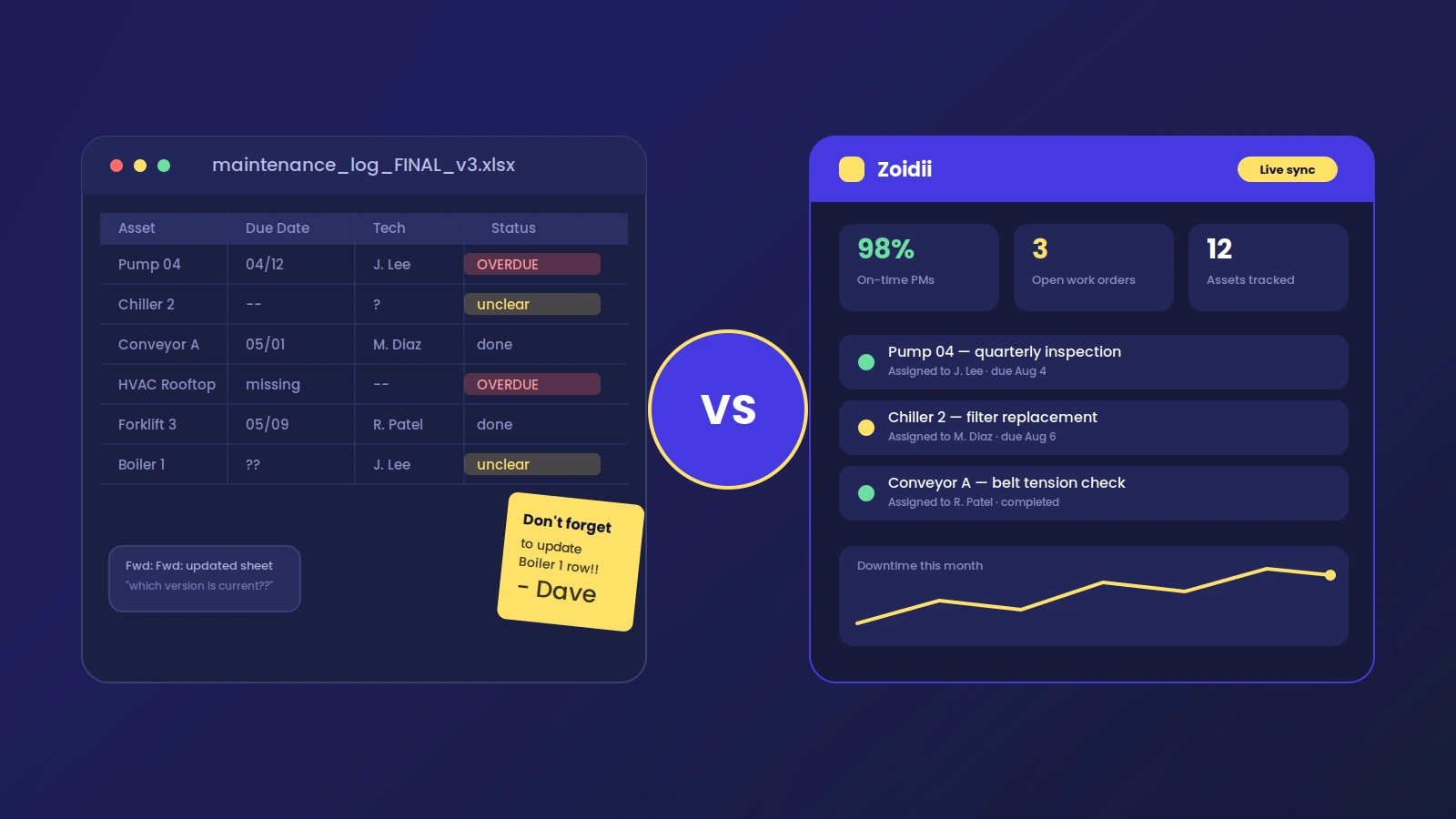

The Maintenance Maturity Model is a simple roadmap. It shows where your maintenance program is today and the next step to move from firefighting to smooth, scheduled work.
This guide explains the five levels, gives you a 10-question self-check, and lays out the first 90 days to help you show progress fast.
A CMMS (Computerized Maintenance Management System) turns daily work into data you can act on, so improvements stick.
- The Five Levels - The model breaks things down into five stages, from Level 1 (Reactive) all the way to Level 5 (Prescriptive).
- Self-Assessment - A quick 10-question check helps you figure out your team’s current level and see exactly where you can improve.
- Actionable Steps - Each level has a clear focus, so you can decide what to work on next to get better results.
- CMMS Support - A modern Computerized Maintenance Management System (CMMS) gives you the tools you need to climb the ladder.
What the Maintenance Maturity Model Shows
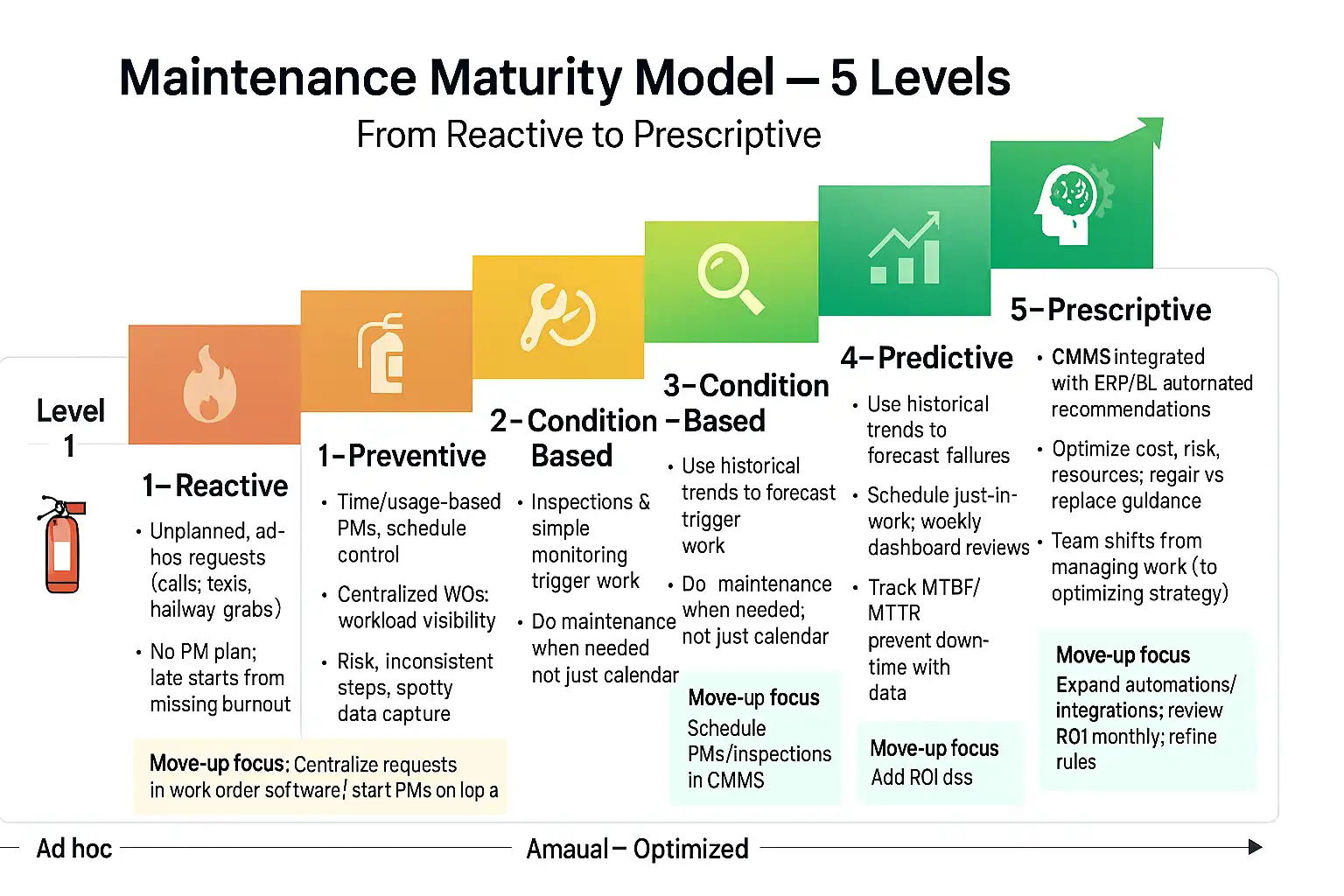
Think of the maintenance maturity model like a ladder. Each rung is a step up in performance, control, and efficiency. Down at the bottom, you’ve got purely reactive maintenance, where your team is always putting out fires.
At the very top, you have prescriptive maintenance, where data and automation guide your every move.
Pick your next step (90-day view)
Recognizing your current level is a game-changer. It helps you stop trying to do everything at once and instead focus your energy on the next logical step. For the next 90 days, what’s the one thing that will make the biggest difference? The model gives you that answer.
Where a CMMS fits
A modern CMMS software is the engine that drives this journey. It’s where you record the work, parts, and time that turn daily tasks into useful data. You’ll see the progress in terms you’ll recognize. Requests that used to come in by text are now organized. Paper checklists that lived in a drawer are now digital and trackable. You’ll get fewer surprise breakdowns, a shrinking work order backlog, and no more last-minute scrambles for parts.
The Five Levels at a Glance
Each level of the maintenance maturity model has its own feel. Here’s a quick look at what to expect at each stage, what to focus on to move up, and which CMMS features will help you get there.
Level 1 – Reactive
You’ll recognize this level by the chaos. Maintenance is unplanned, and the team is always in reaction mode. Work requests come from phone calls, texts, or someone grabbing a technician in the hallway.
There’s no consistent preventive maintenance (PM) plan, and jobs often start late because parts and tools aren’t ready. The biggest risks are constant unplanned downtime, high overtime costs, and tech burnout.
Move-up focus - Centralize all requests with a work order software and start a preventive maintenance program for your top assets.
Level 2 – Preventive
At this stage, you have some control over your schedule. You’ve started doing time-based or usage-based PMs, which helps prevent some of the most common failures. Work orders are managed in one central system, giving you a much better handle on your team’s workload.
The risk here is that your processes are still inconsistent. Techs might follow different steps for the same job, and data capture can be spotty.
Move-up focus - Attach standard maintenance checklists to PMs and use a mobile CMMS software directly from the field.
Level 3 – Condition-Based
Now your maintenance strategy is getting more proactive. You use inspections and simple condition monitoring (like checking temperatures or vibration levels with handheld tools) to trigger work.
Instead of just following a calendar, you’re doing maintenance when it’s actually needed. You’re also capturing more detailed data, such as meter readings and failure codes, to determine why assets fail.
Move-up focus - Use your CMMS to schedule maintenance PMs and inspections; add QR code equipment maintenance on assets.
Level 4 – Predictive
Now you’re using historical data and trends to forecast potential failures. Instead of reacting to a condition, you can predict when an asset is likely to fail and schedule maintenance just in time.
Your team holds weekly dashboard reviews to analyze performance and adjust plans on the fly. You're not just fixing things anymore. You’re actively preventing downtime and backing up your decisions with data.
Move-up focus - Hold a weekly dashboard review, track MTBF/MTTR, and set alerts on leading indicators (e.g., vibration, temperature, amperage). Use an ROI calculator to translate gains into dollars.
Level 5 – Prescriptive
This is the top of the ladder. Your CMMS is integrated with other business systems, and automated workflows recommend the best course of action based on cost, risk, and resource availability.
For example, the system might suggest whether it’s more cost-effective to repair or replace an aging asset. Your team’s focus shifts from managing work to optimizing the entire maintenance strategy.
Move-up focus - Expand automations and integrations (ERP/BI). Review ROI monthly and refine rules. Not sure where you land? Use the quick check below.
Quick Self-Check: 10 Questions
Answer these 10 questions to get a quick idea of your team’s current maturity level. Score each statement from 0 to 2, where 0 is ‘Never,’ 1 is ‘Sometimes,’ and 2 is ‘Always.’
1. Work requests are captured in a single, centralized system. (0/1/2)
2. We follow a documented preventive maintenance schedule for critical assets. (0/1/2)
3. Standardized checklists are used for common maintenance tasks. (0/1/2)
4. Technicians log their time and parts used on every work order. (0/1/2)
5. We use a mobile app to manage work orders in the field. (0/1/2)
6. We track asset condition with meter readings or inspections. (0/1/2)
7. Failure codes are recorded to analyze the root causes of breakdowns. (0/1/2)
8. We review maintenance dashboards weekly to track performance. (0/1/2)
9. We can accurately report on our maintenance backlog and PM compliance. (0/1/2)
10. Our maintenance decisions are based on data trends and history. (0/1/2)
Your Score:
- 0–7 Points (Likely Level 1) - Your main focus should be on getting organized. Start by centralizing requests with work order software.
- 8–12 Points (Likely Level 2) - Standardization is your next step. Implement maintenance checklists to make your processes repeatable.
- 13–16 Points (Likely Level 3) - It’s time to get proactive with your data. Empower your team with mobile CMMS software to capture information in real time.
- 17–19 Points (Likely Level 4) - Your goal now is optimization. Use your data to forecast failures and make smarter decisions.
- 20 Points (Likely Level 5) - You’re at the top. Focus on refining automations and integrating systems for continuous improvement.
From Reactive to Proactive - What Changes
Moving up the maturity ladder changes your whole operation. That shift from reactive to proactive maintenance creates positive changes that your entire team will feel.
Work Intake and Planning Improves
Instead of a constant stream of urgent requests, work flows through one single channel. With work order software, you can set clear priorities and build a weekly schedule that your team and production managers can actually trust.
PMs and Checklists Reduce Misses
A real preventive maintenance program means your most important assets get the attention they need. Standardized maintenance checklists reduce differences between techs and make sure no steps are missed.
PM compliance becomes a measurable KPI, and passing a CMMS audit gets a whole lot easier.
Parts and Purchasing Stop Last-Minute Scrambles
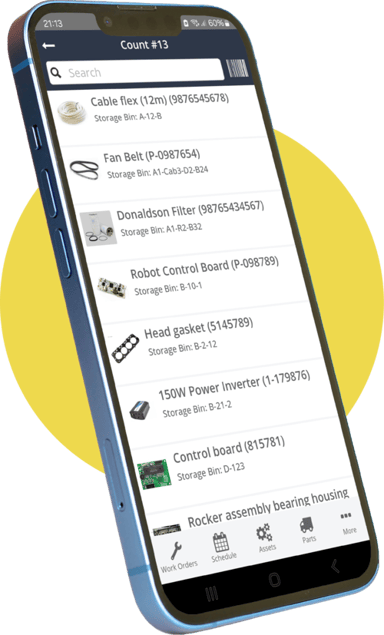
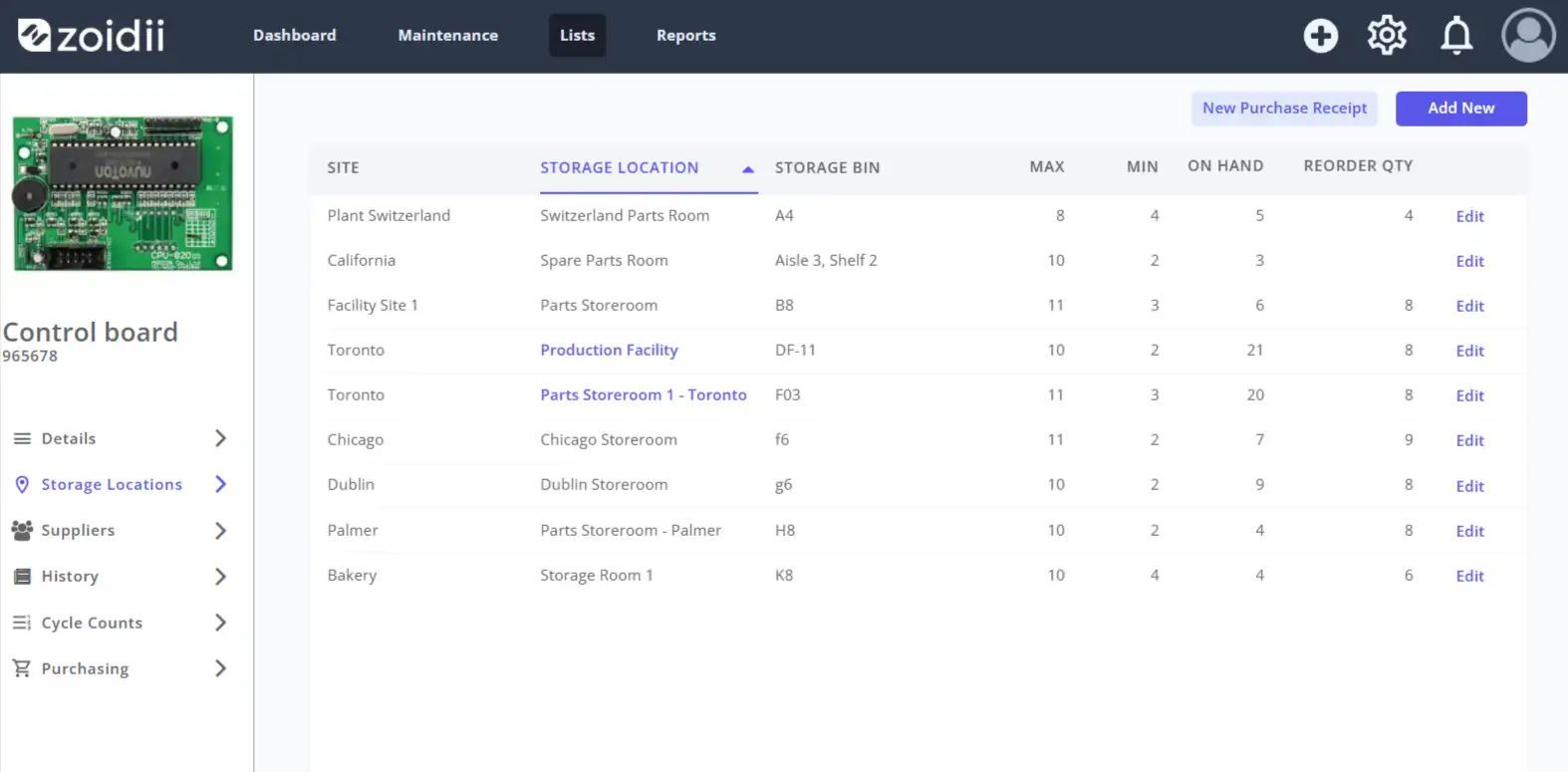
With CMMS spare parts tracking, you always know what you have and where it is. Setting min/max levels triggers automatic reorder alerts, which stop the stockouts that delay jobs.
A simple purchase order software streamlines approvals and gets parts on order much faster.
Data Capture Becomes Second Nature
When your techs can log work on the go with a mobile CMMS software, data capture becomes part of the job, not an extra step.Using QR code equipment maintenance to pull up asset history and close out work orders makes the whole process fast and accurate. And better data always means better decisions. Need a 90-day path? Follow our step-by-step plan to move from reactive to proactive.
How a CMMS Helps at Each Level
A CMMS gives you the tools you need at every stage of your maturity journey. Here’s a simple map of which features support each level.
- L1 - Centralize work orders, set priorities, and track response time.
- L2 - Build a preventive maintenance library, attach maintenance checklists, and manage a shared calendar.
- L3 - Use meters, failure codes, inspections, and QR scanning.
- L4 - Review dashboards weekly, set threshold alerts, and report trends.
- L5 - Automate workflows, integrate with BI/ERP, and track approvals and outcomes.
Maintenance Maturity Model Tools & Templates
Zoidii provides simple, powerful tools to help you climb the maintenance maturity ladder. Each topic above is linked in the sections earlier in this guide.
- Work orders
- Preventive maintenance
- Preventive maintenance software
- Checklists
- Inventory & POs
- Mobile & QR
- ROI
- Audits
Maintenance Maturity Model FAQs
1. How do I know my level?
Use the 10-question quick check on this page, then take the full maintenance maturity assessment for a more detailed score.
2. What’s the difference between condition-based and predictive?
Condition-based acts on current readings; predictive forecasts a failure window from history. For the level-by-level map, see the CMMS support guide for maturity growth.
3. How fast can we move up a level?
Try aiming for 90-day improvement cycles, with a short weekly review. See the step-by-step plan for moving from reactive to proactive.
4. Which CMMS features matter first?
Start with Work Orders, then PMs to stop repeat failures, add Checklists, and move to Mobile or real-time capture.
Get Started on Your Maturity Journey
Ready to climb a level? Book a Free Demo and see how fast teams get requests, PMs, and parts under control.