
Background
Meter readings are used to track equipment parameters such as hours, cycles, pressure etc. In addition, preventive maintenance can fire based on meter based triggers. When the meter hits a certain threshold, the PM is triggered. There are a number of ways to log meter readings in Zoidii
- In the top navigation bar
- In the asset record
- In the work order task
1. Log a Meter Reading via the Top Navigation Bar
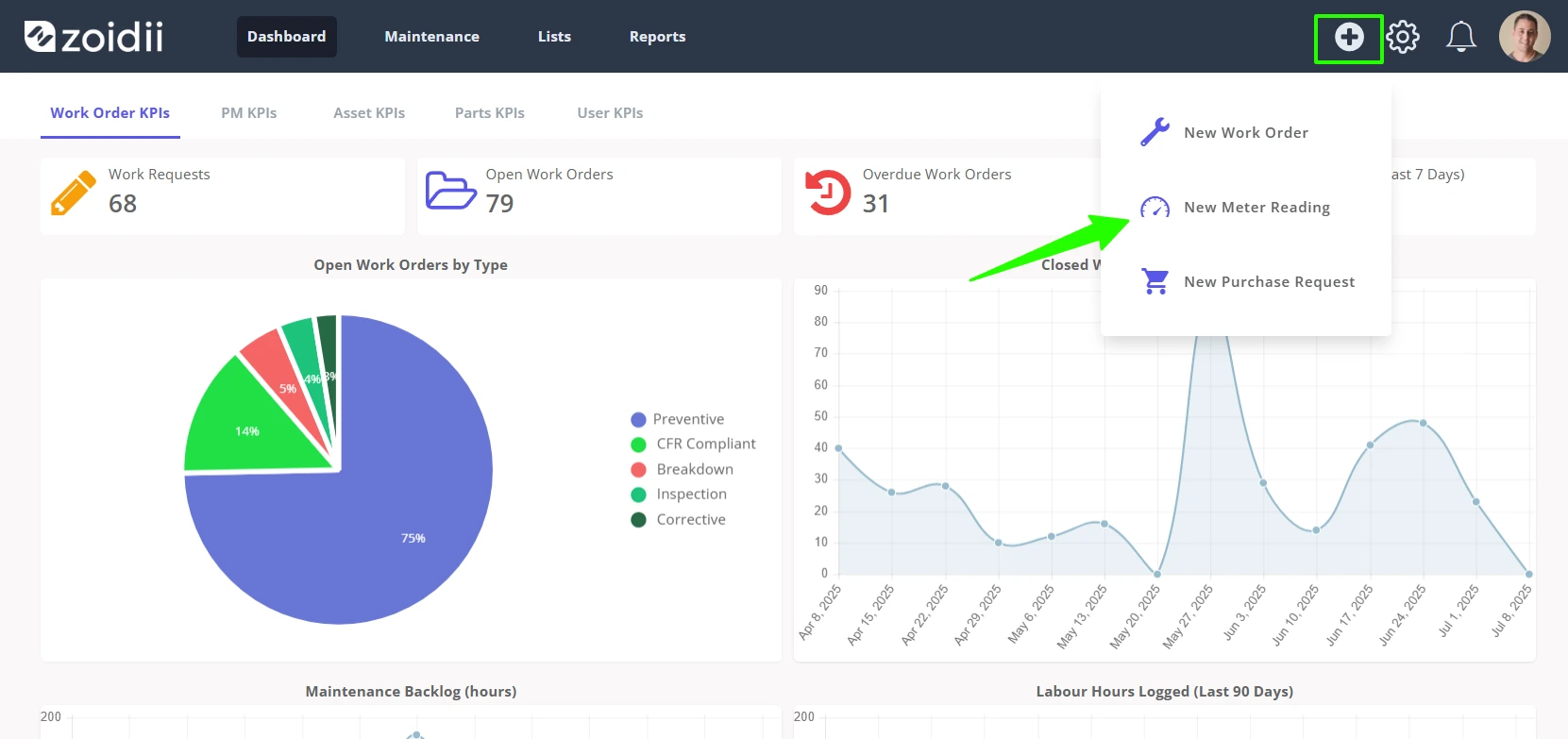
1. In the top Navigation Bar, click the Add New icon, and select New Meter Reading from the dropdown
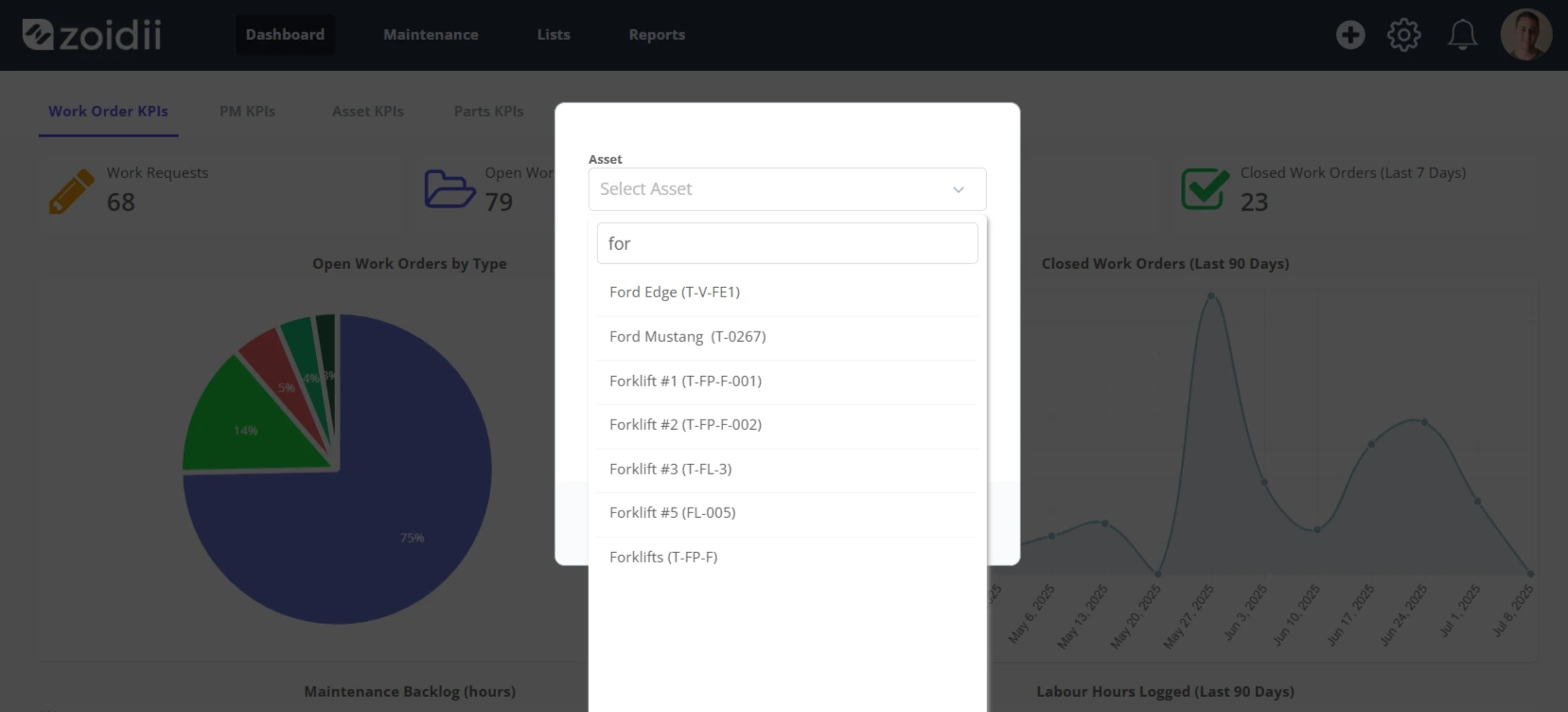
2. Select the Asset from the asset dropdown
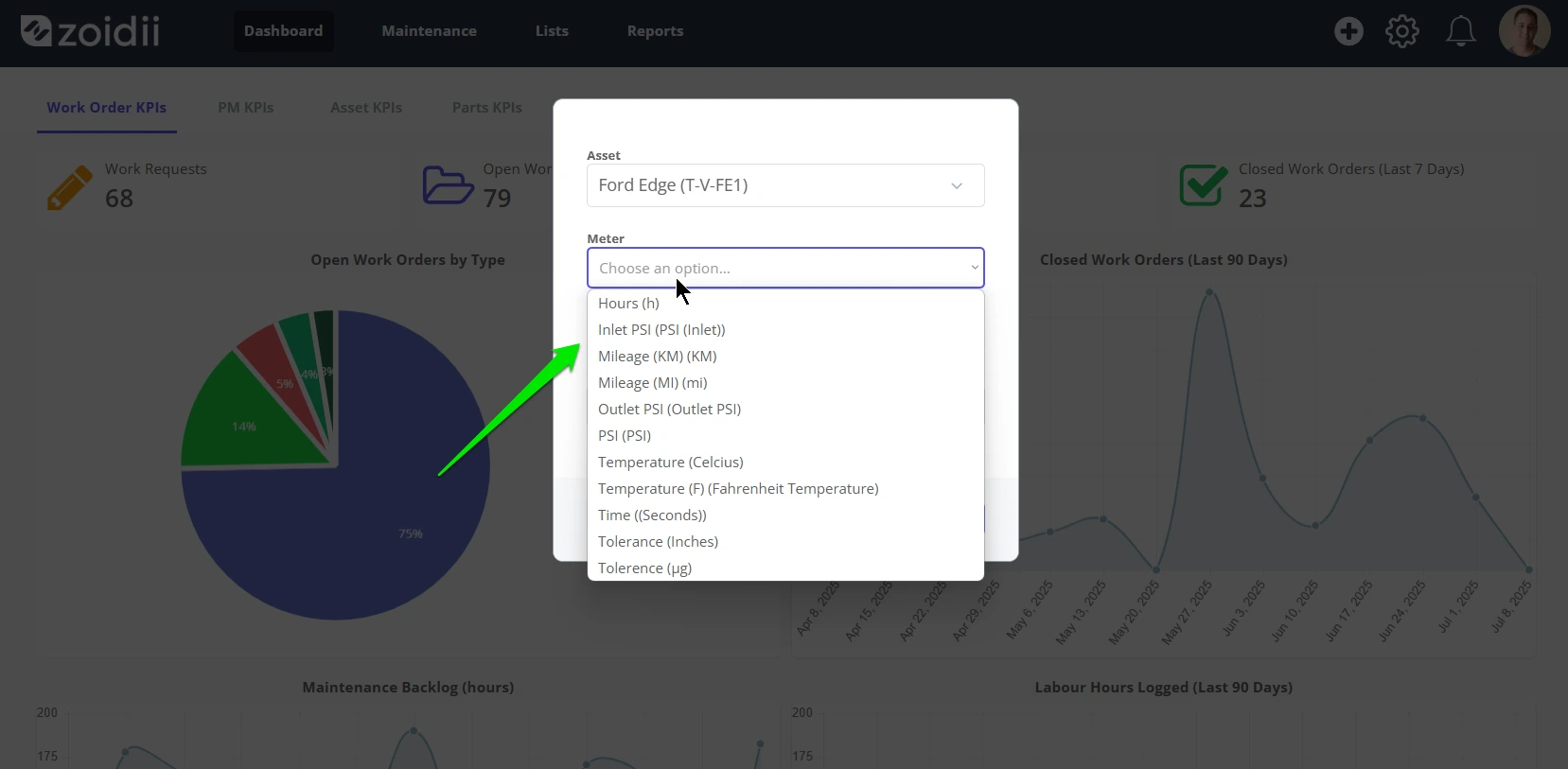
3. Select the meter type from the Meter Type dropdown
4. Add the meter value to the Meter Value field
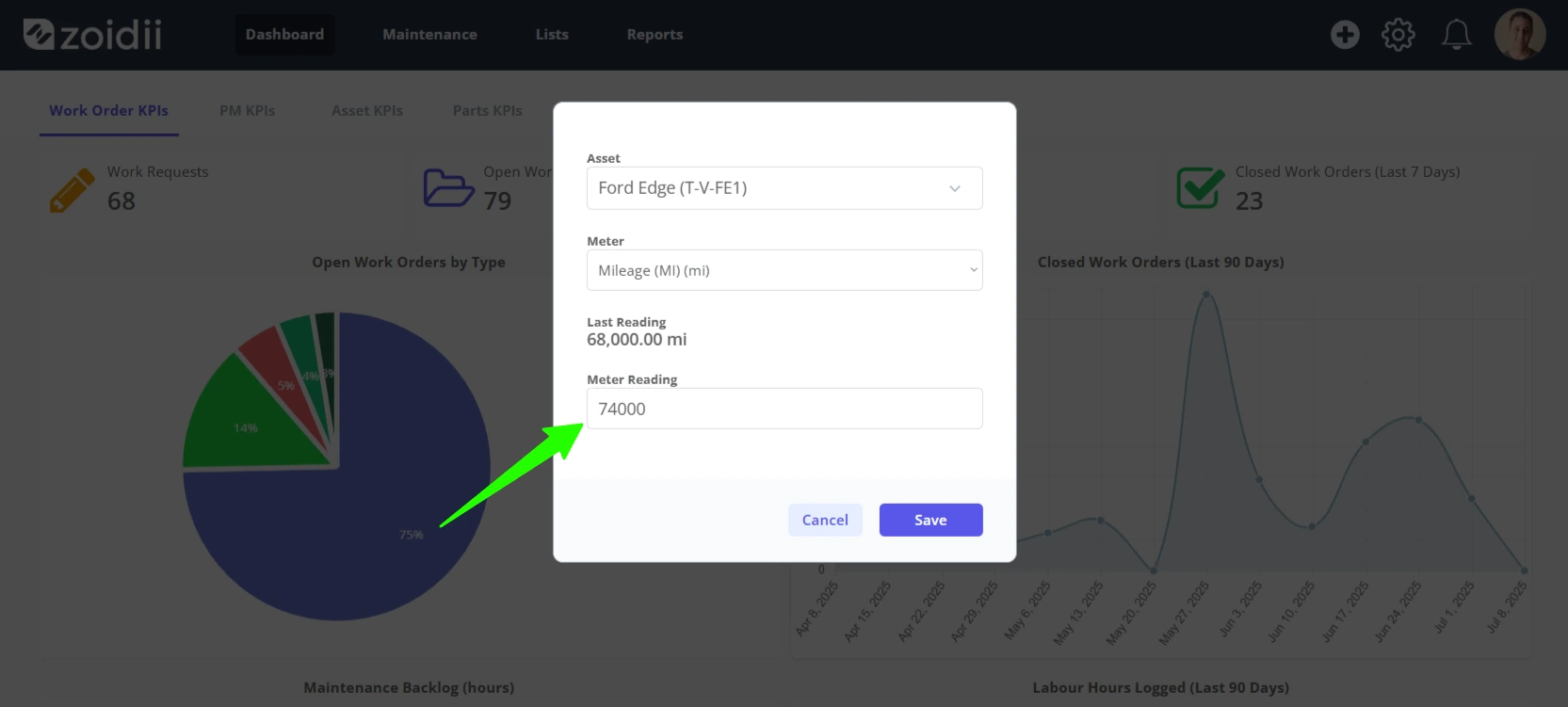
5. Click Save to log the meter reading.
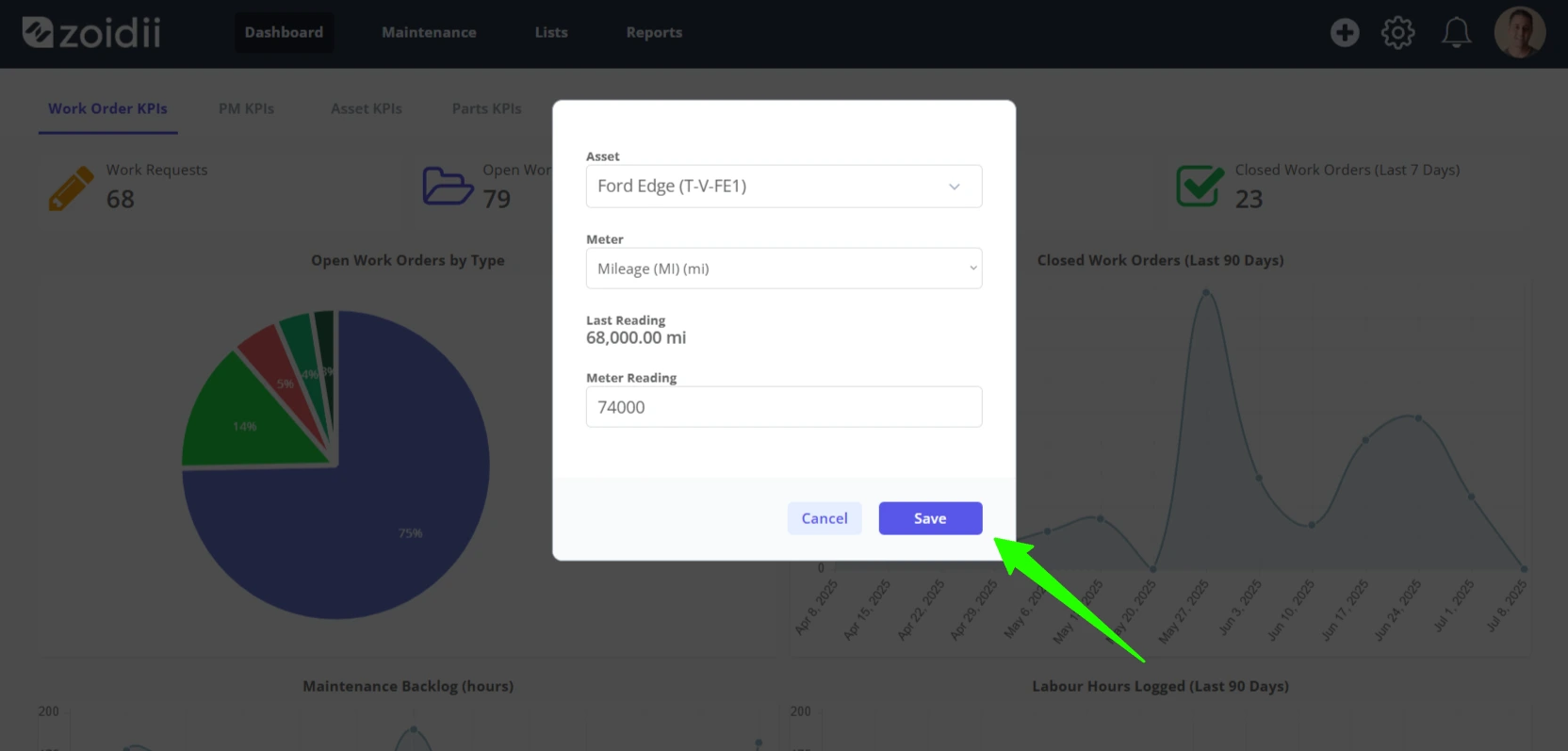
6. Before the meter is logged in the database, Zoidii checks to see if the Meter Value entered will trigger a PM. If no PM will be triggered, the system logs the meter reading and closes the window. If the meter reading does trigger a PM, Zoidii prompts the user to verify the meter reading
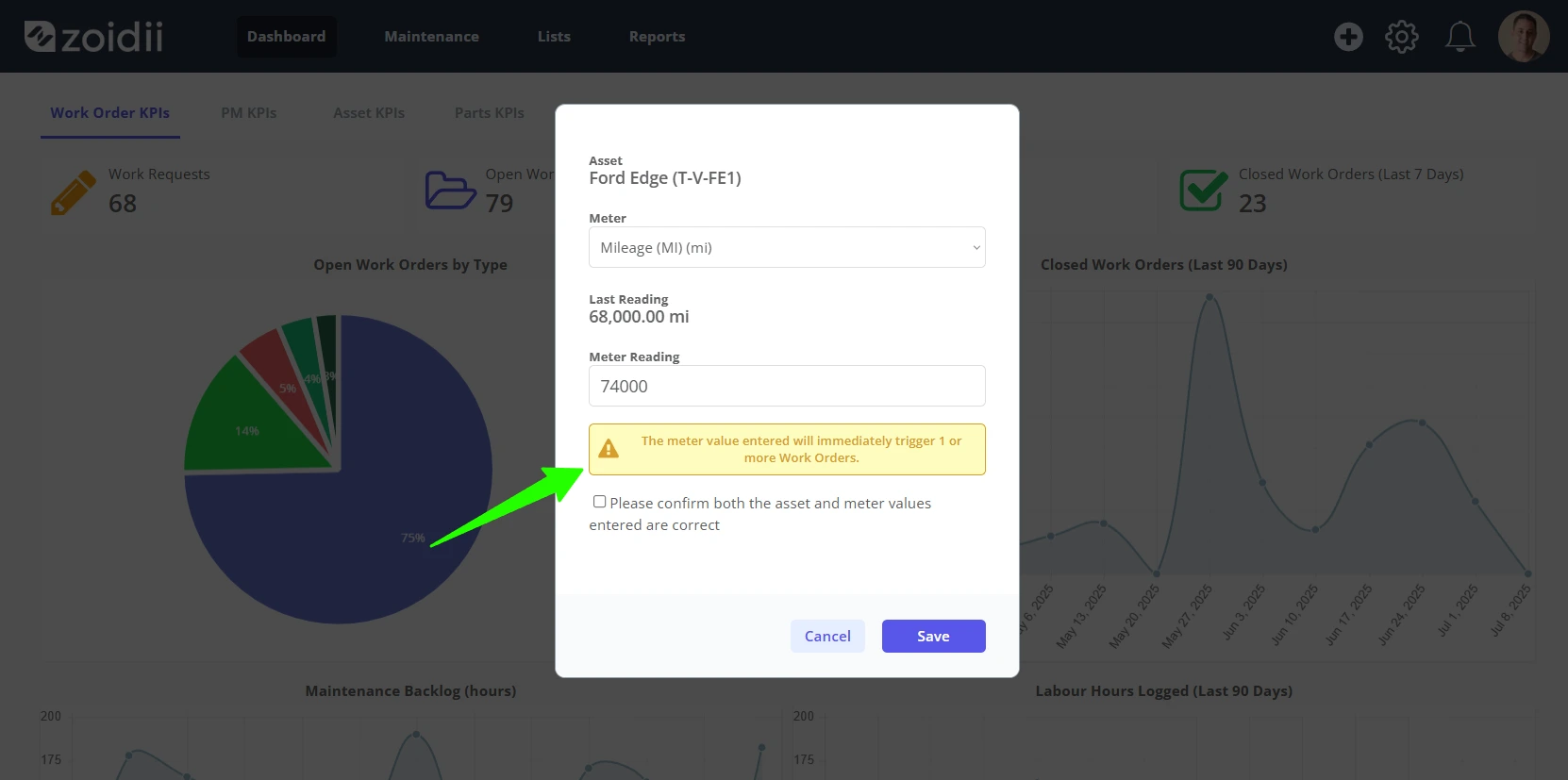
7. Check the checkbox to confirm the value entered, and click Save.
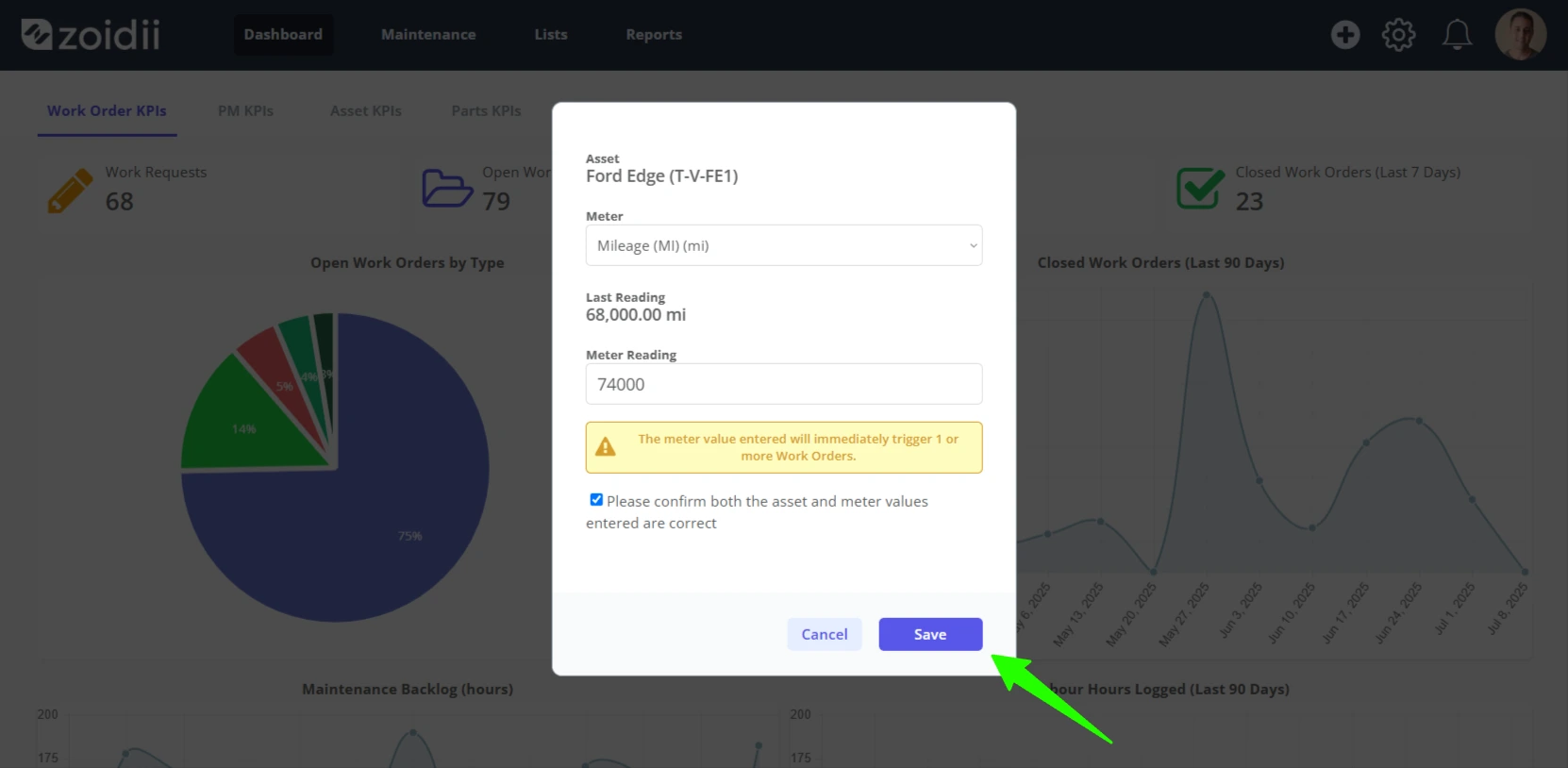
8. If the meter is correct, then the PM work order will be triggered.
2. In the Asset Record
1. Open the asset record, select the Meters tab, and click Log Reading on the top right hand side
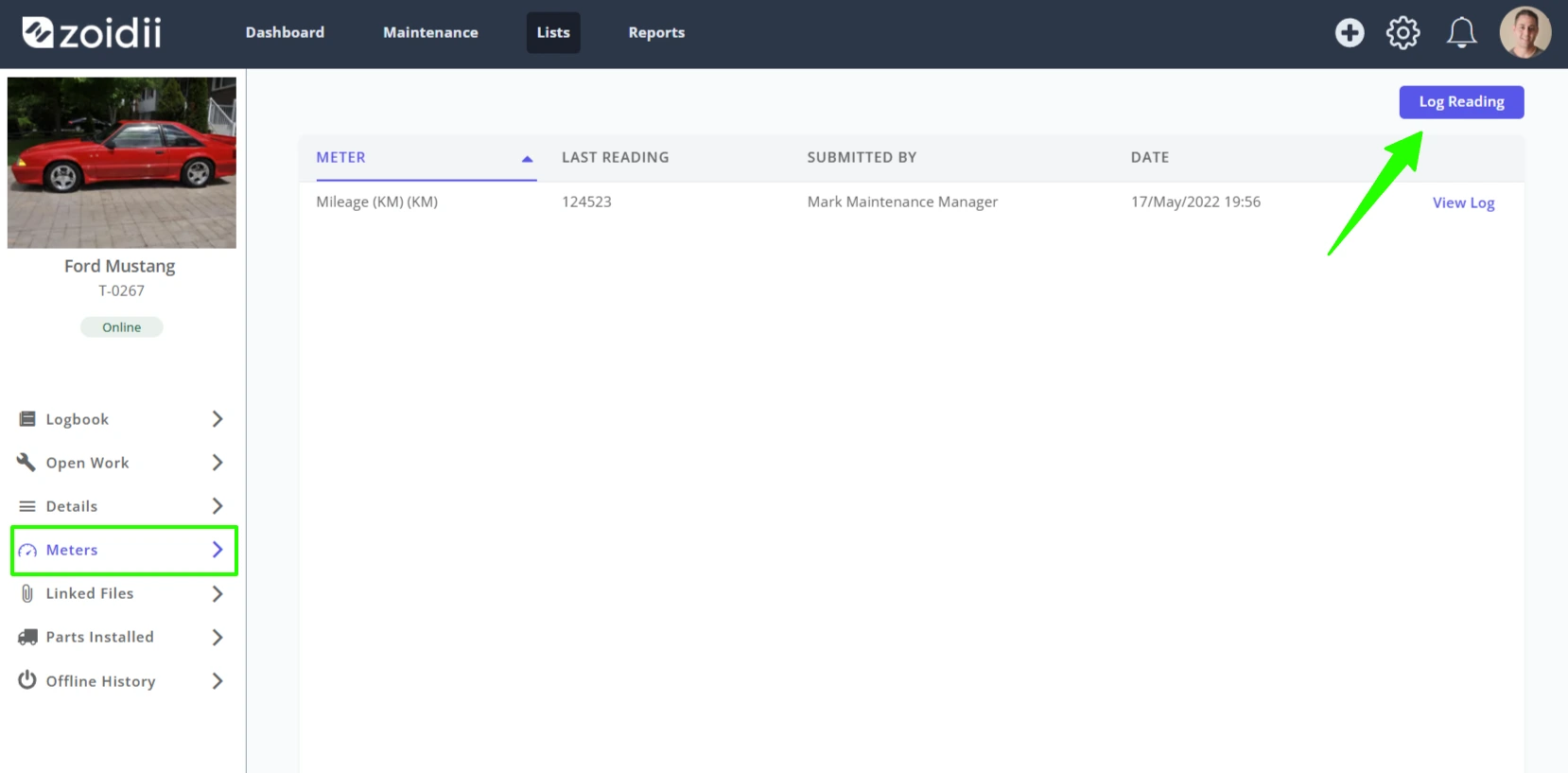
2. Log the meter the same way as in #1 above
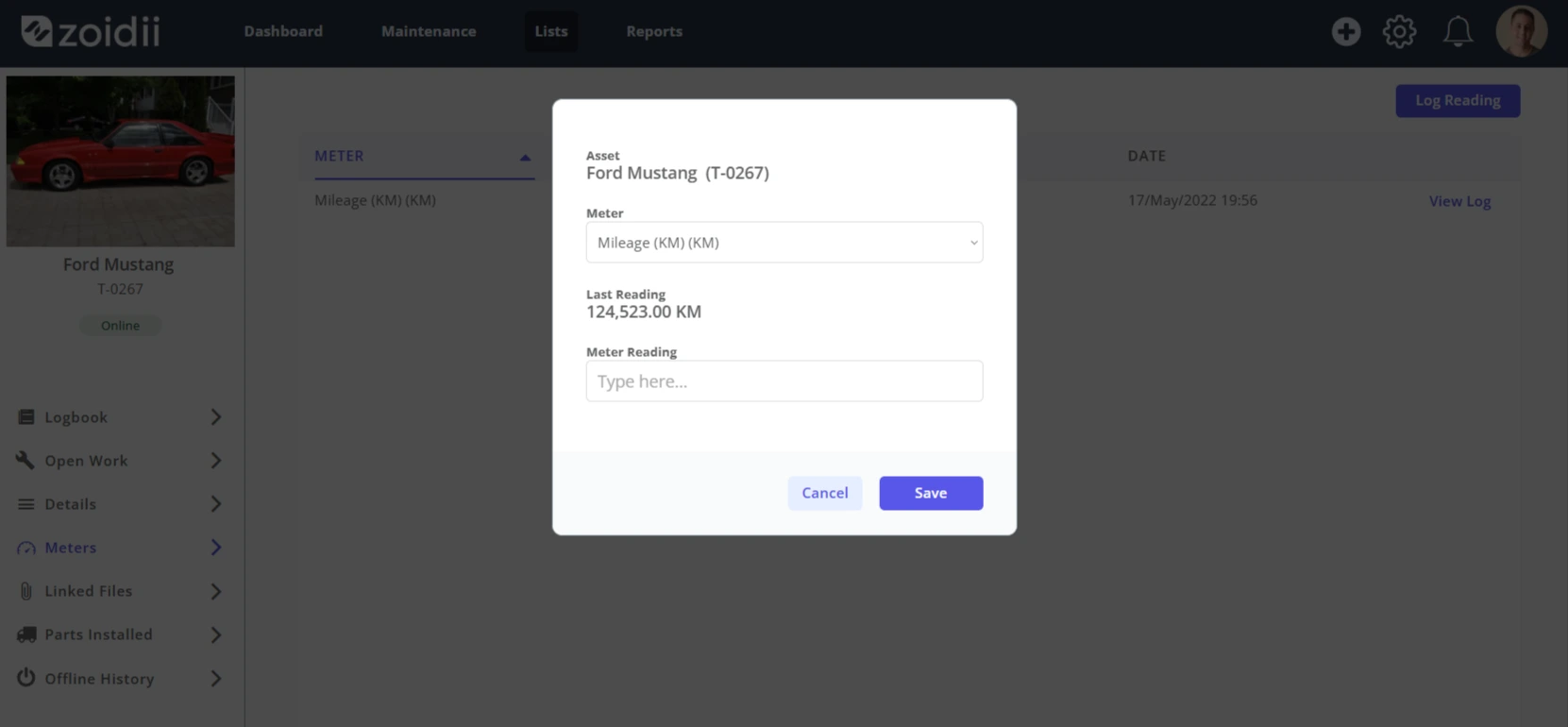
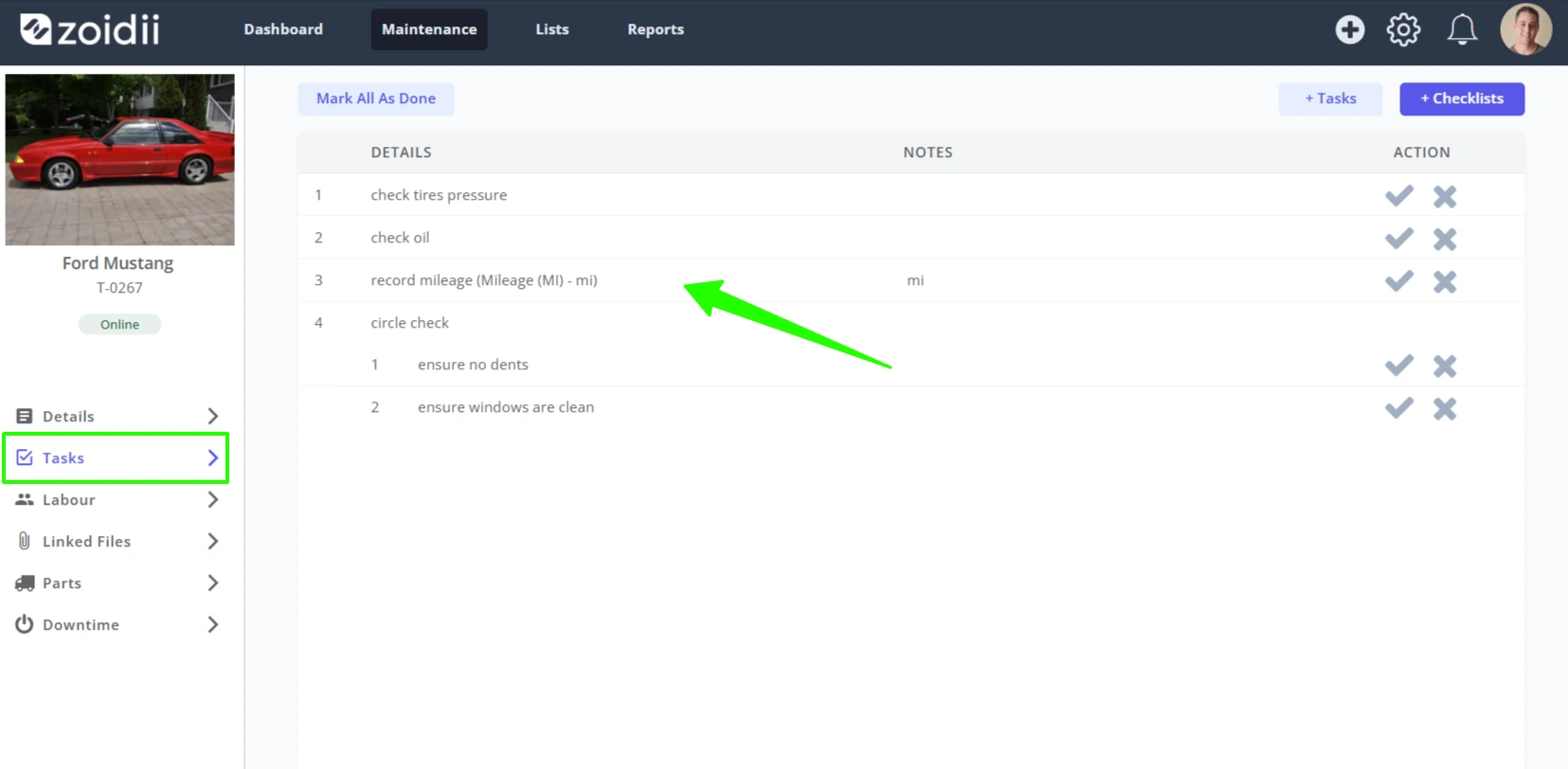
3. Log a Meter Reading in the Work Order Task
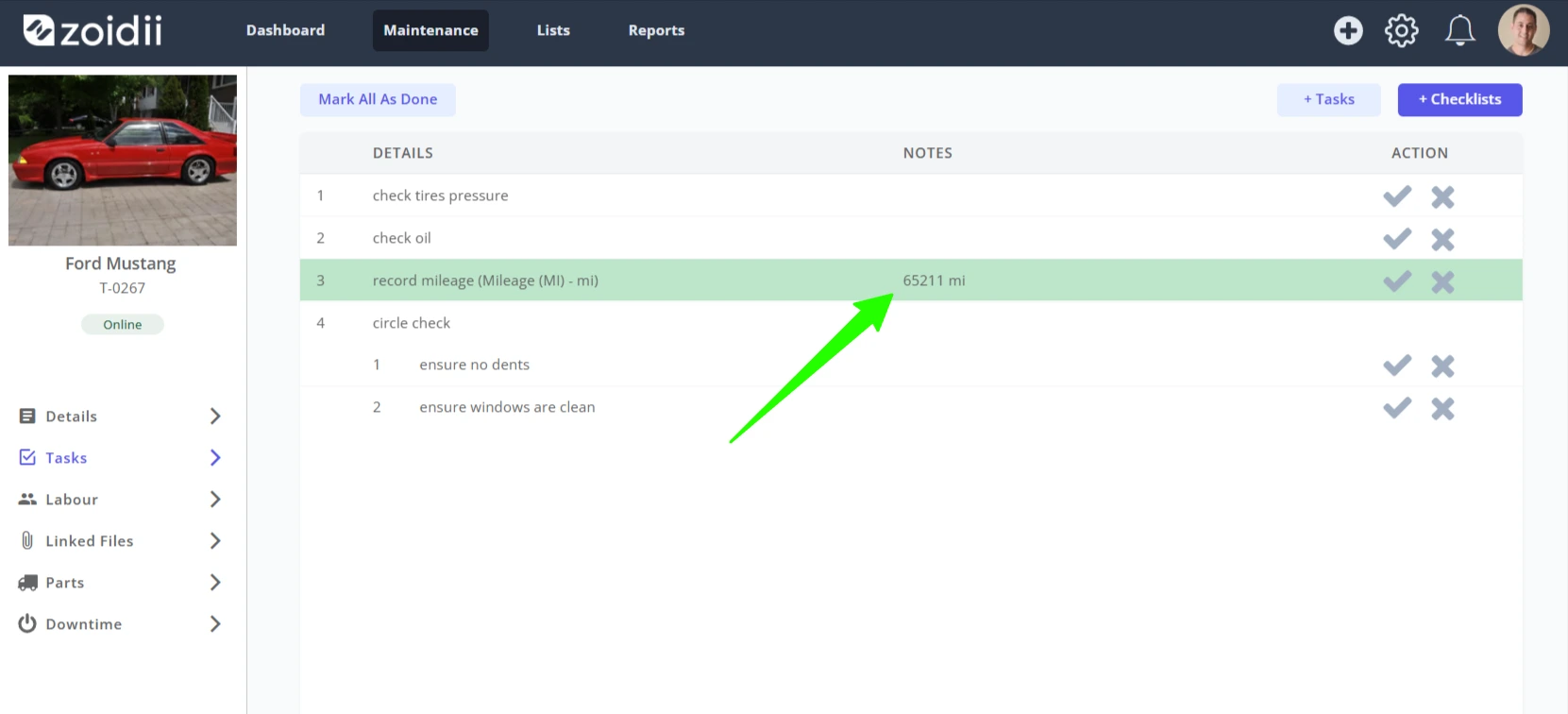
1. Open the Work Order Tasks tab, and click the Task Meter Reading
2. Add the meter reading in the popup window and click Save New
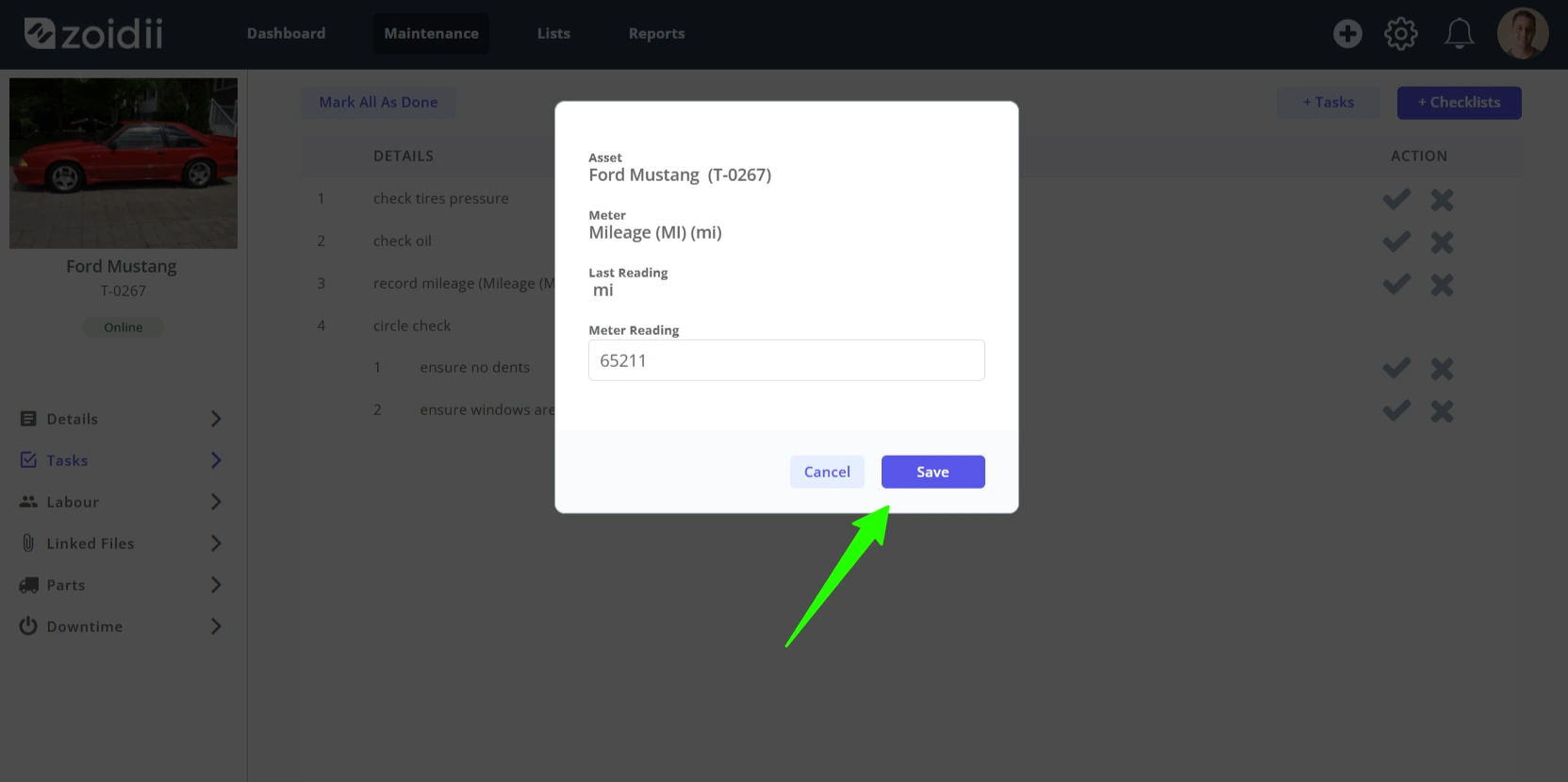
3. The meter is logged and the task is signed off as done