
You've conducted your research and analysis, and are confident that the business needs CMMS software. However, getting decision-makers to give the green light is tough when they don't understand why CMMS software is required.
The most effective way to justify adopting new CMMS software and securing stakeholder buy-in is to prepare a comprehensive business case. That way, all stakeholders understand the expected costs, benefits, and return on investment.
This article will teach you how to build a business case for new software.
What are the Main Components of a CMMS Business Case?
A business case is a formal document submitted to upper management to request funding for a proposed project. It outlines the business problem and the proposed solution to that problem.
Preparing a business case for purchasing software confirms that the business problem is fully understood, and the project team presents the best possible solution.
Typically, a key stakeholder such as a maintenance manager or director of maintenance prepares the business case for CMMS software.
In essence, the business case for CMMS software is an assessment of:
- The business problem
- The reasons to solve the problem
- The associated costs
- The expected timeline
- Availability of resources
- Any project risks
- The organization's ability to successfully execute the project
- The benefits and return on investment
Step 1 – Identify the Business Problem
This section outlines the business problems or challenges that need addressing. Often, CMMS software is seen as the silver bullet that fixes a poorly performing or dysfunctional maintenance operation.
Frequently, more significant issues are at play, such as poor leadership, lack of resources, a culture of neglect, freeloaders, or low morale. Be sure that implementing CMMS software will alleviate the business problems. Some typical business challenges addressed by CMMS software include:
- No system of record for maintenance
- Poor organization
- No accountability
- No formal process for work requests
- Impossible to pull maintenance KPIs or reports
- Regulatory compliance
- No transparency
- etc
Step 2 – Present the Proposed Solution
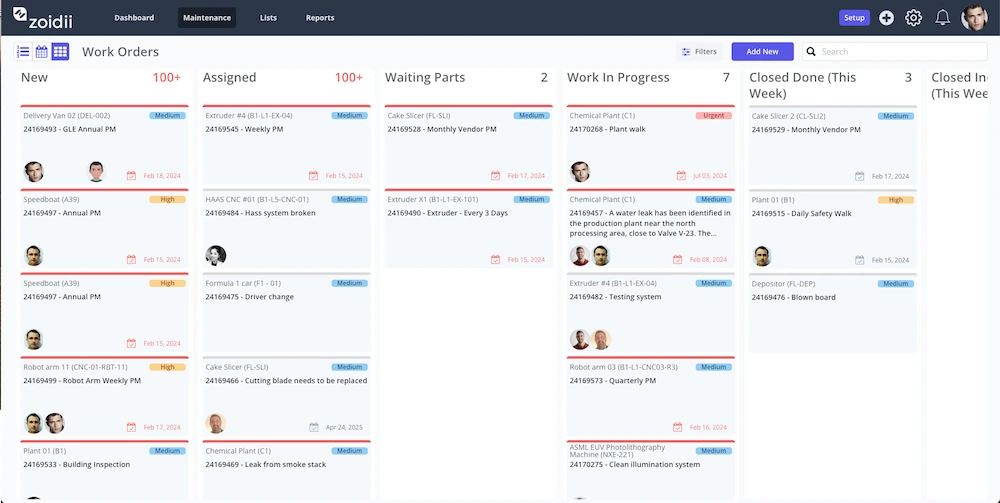
This section in the business case should describe how the CMMS software will solve the business problem.
The proposed solution may solve some or all of the requirements, so be clear to specify what the software can and cannot do.
You may also need to justify the type of solution in this section; cloud CMMS versus a customized ERP or custom build.
Step 3 - Eliminate other Options
There are many ways to skin a cat, so the stakeholders may have other opinions on how to solve the business problem.
Get ahead of it by listing the alternatives, along with their associated advantages and disadvantages. Explain why some alternatives may not be feasible, and the CMMS software option is the best course of action.
Step 4 – Summarize the Benefits
Here, a cost-benefit analysis is conducted to link the tangible and intangible project benefits to the business problem. Outline the most significant business drivers and the associated benefits for your organization.
Just remember, humans can only process three pieces of good news at once, so limit your key benefits to your top 3. For example:
- Business driver: The team has no system of record for maintenance. When we bring in new people, it takes them a significant amount of time to ramp up. Additionally, when people leave, a considerable amount of knowledge that could benefit the company in the future also walks out the door.
- Associated benefit—Implementing a CMMS enables the capture of knowledge in the system, making technicians less reliant on memory or key individuals. They can quickly access maintenance records, asset histories, repair steps, or parts used in the CMMS.
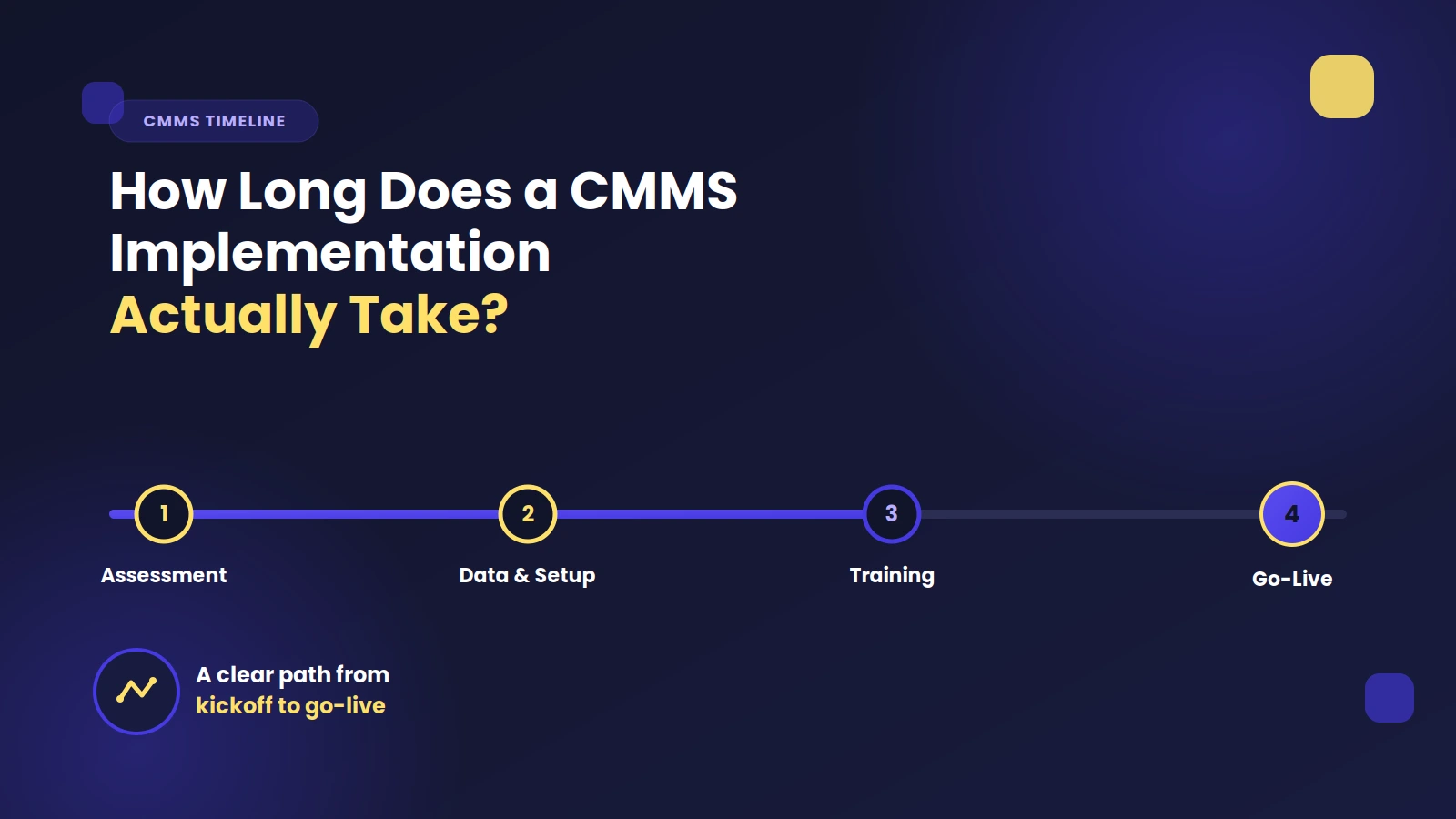
Step 5 - Outline the CMMS Implementation Timeline.
Several factors can influence the timeline, including the plant's size, the number of resources, vendor participation, or team capabilities.
In addition, it is possible to break the CMMS implementation into phases. For example, get the team to process reactive work orders first and add PMs and parts later.
Outline the expected timeline for completing major milestones, including kickoff, data migration, data gathering, system configuration, training, and go-live. Ensure you create a detailed CMMS implementation project plan that takes into account integration with an existing system.
Step 6 – Detail the Costs and ROI
The primary concerns of business leaders are the total cost of ownership and return on investment. The project must yield a decent return on investment; otherwise, it's not worth pursuing. The total cost of ownership comprises the initial investment required to implement the system, as well as the ongoing costs associated with maintaining the software.
1. Implementation costs
First, understand the expected upfront costs associated with the software purchase, including licenses, implementation, training, integration, and hardware costs.You may find some vendors have a lower initial cost but higher recurring expenses, so it’s critical to do a thorough cost savings analysis.
Opting for a cloud-based CMMS solution, such as Zoidii, can help minimize IT server and hardware costs. Indirect costs such as labor hours and resources consumed during the project should also be included.
2. Recurring costs
Next, outline the ongoing costs over the expected lifetime of the CMMS. Cloud-based CMMS Software vendors usually include some ongoing costs, such as support, upgrades, and maintenance, in the annual license fee.Include other "not-so-obvious costs," such as hardware replacement, mobile phone data plans, or fees for updates to integrations.
Many organizations offer phone stipends to use personal phones, saving on hardware costs, and technicians don't need to carry two devices.
3. ROI Calculation
Next, outline the return on investment. The ROI is an approximate measure of the project's profitability. It is an educated estimate as it cannot account for future changes or growth in the business. The formula for calculating the ROI is as follows:ROI = (CMMS Value - CMMS Costs) / CMMS Costs Use Zoidii's CMMS ROI calculator to get an approximate return on investment. CMMS value is the dollar amount associated with the expected benefits. You could also include some inherent value from the intangible benefits, such as improved quality or customer satisfaction.
Step 7 – Define the Resources Needed
CMMS implementation projects have the best chance of success when both the company and the vendor are involved.
Cloud-based CMMS vendors generate the majority of their revenue from software licenses, so ensuring the customer is configured correctly from the start and utilizing the system regularly is in the vendor's best interest.
CMMS software tends to be more data configuration than system configuration, so you'll need a solutions architect to configure your PMs and standard operating procedures.
The solution architect is a team member who is technically proficient and has a deep understanding of the maintenance operation.
Step 8 – Assess Any Risks
Every project has risks, so detail any known risks that could derail the project, such as a critical resource leaving the organization before the project is complete.
Address these risks early to avoid delays during CMMS selection and outline how you plan to mitigate them. That way, project stakeholders will have all the information needed to move forward with the CMMS implementation.
Step 9 – Measure Success with KPIs
Eventually, you want to show that the project was a success. The only way to do this is to measure it. To demonstrate project success, include the relevant key performance indicators and metrics, such as planned maintenance percentage.
Consider including a satisfaction survey three months after go-live to gauge stakeholders' opinions about the CMMS software. The end users are deeply involved in using the software, so it would be helpful to see how it impacts their work.
The Bottom Line
Creating a strong business case is like telling a story - you are the hero with a solution to the company's struggles. Keep the story engaging, cover all the items outlined above, and always remember to keep it concise and straightforward.
It won't get traction if it is overly complicated to digest. You have achieved your goal when stakeholders are fully committed to the idea. If business leaders reject your business case, work through the issues and concerns, and resubmit it for consideration.