
What are the three main types of preventive maintenance?
Both "preventive" and "preventative" are widely accepted terms for proactive maintenance.
What Is Preventive Maintenance?
Preventive maintenance is essential to keeping your equipment running smoothly, helping to increase equipment reliability, and preventing costly failures.
Different Types of Preventive Maintenance
There are several approaches to preventive maintenance that organizations can utilize to prolong the life of their equipment and keep it operating efficiently. These types of preventive maintenance are important for operational stability.
This article will explore the differences between the three main types of preventive maintenance: time-based, meter-based, and condition-based.
Time-Based Maintenance
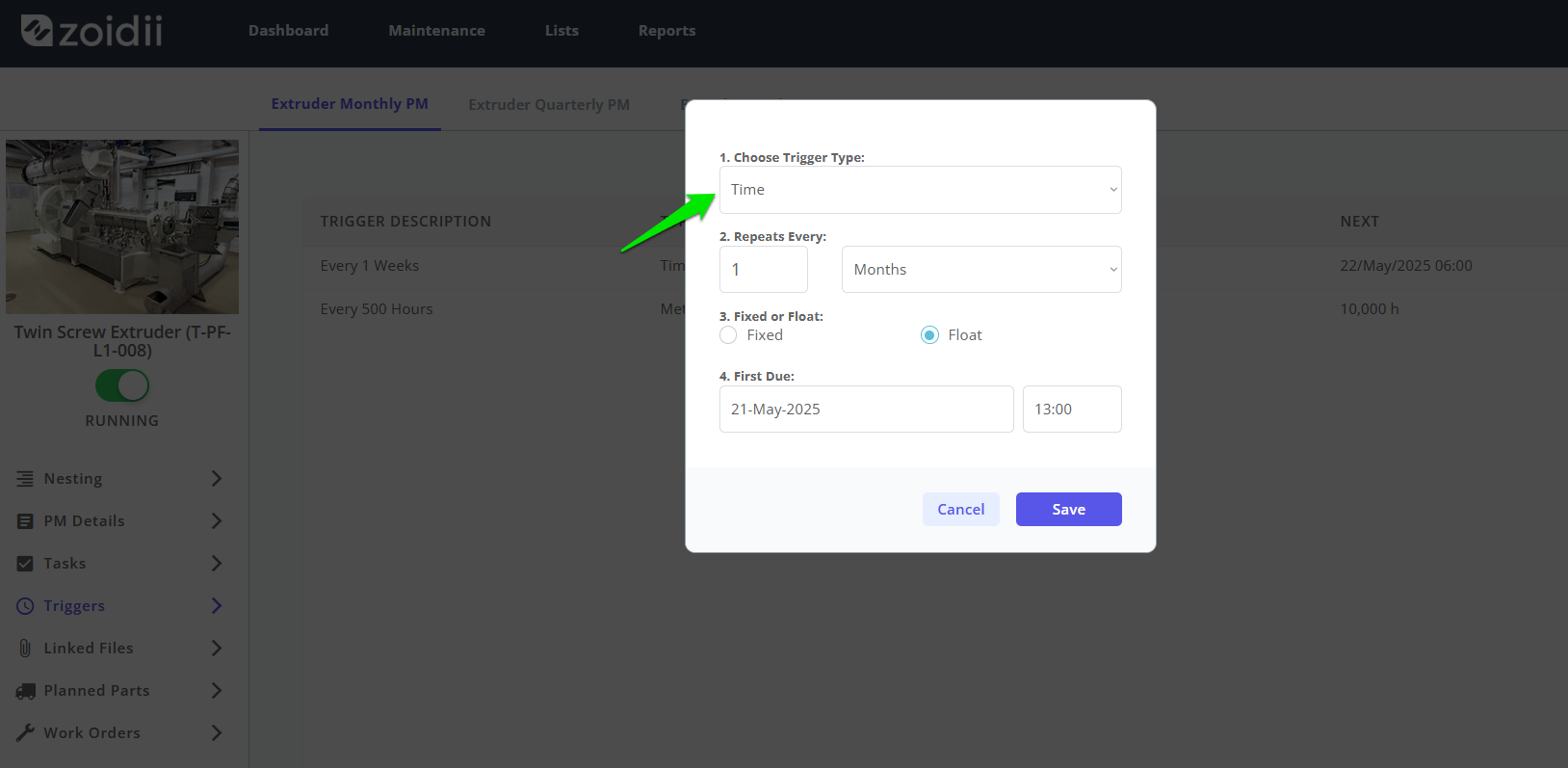
Time-based maintenance, formally known as Time-based preventive maintenance (or sometimes calendar-based maintenance), involves scheduling maintenance at set intervals, such as every six months or annually.
It’s a good fit for equipment that runs on a regular schedule, not all the time.
For equipment used under varying conditions, predictive maintenance (PdM) can complement this method by providing more precise timing for maintenance tasks based on equipment data.
Advantages of Time-Based Maintenance
- Easy to plan and schedule in advance
- Helps with budgeting and resource allocation
- Works well for seasonal equipment (like air conditioning units)
- Can prevent costly breakdowns by catching issues before they become serious
- Supports workplace safety by keeping equipment in good working condition
Drawbacks of Time-Based Maintenance
Time-based preventive maintenance ensures that equipment is in good working condition and prevents costly breakdowns. However, it is vital to consider the frequency of maintenance and the equipment's usage patterns to save resources and ensure that issues are identified and addressed promptly.
- Maintenance might be performed too often, wasting time and resources
- Can lead to unnecessary costs if the equipment isn’t used frequently
- May miss issues that arise during periods of high usage
- Doesn't always match real-world equipment usage patterns, causing potential for surprise breakdowns
Meter-Based Maintenance
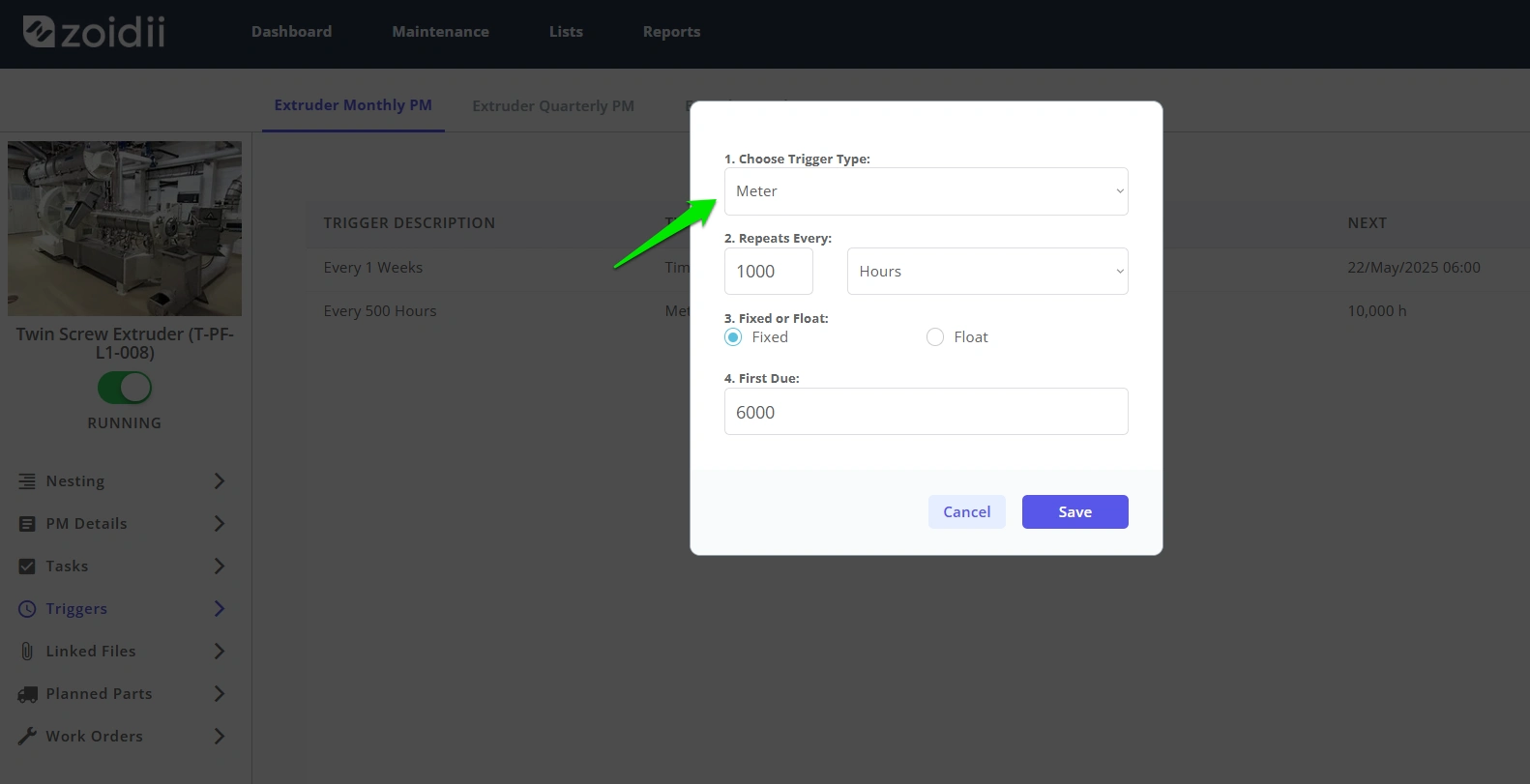
Meter-based preventive maintenance, also known as usage-based maintenance, is a proactive maintenance approach that involves scheduling maintenance based on meter readings or equipment usage. This type of maintenance is more accurate than time-based preventive maintenance because it is based on actual equipment usage. It involves setting maintenance schedules based on the distance traveled or the number of hours of operation.
Identifying issues with meter-based maintenance
Meter-based maintenance can help identify issues that could go unnoticed in time-based preventive maintenance.
For example, suppose a company has a fleet of transportation vehicles. In that case, meter-based preventive maintenance can help identify when a vehicle needs an oil change or a tire rotation based on the miles traveled.
This approach can help prevent breakdowns and extend the vehicle's lifespan. A preventive maintenance checklist can ensure that all necessary preventive maintenance tasks are performed regularly and consistently.
Benefits of Meter-Based Maintenance
- Reduces maintenance costs by targeting actual equipment usage
- Prevents unnecessary work and lowers downtime
- Implementing a preventive maintenance plan helps catch issues early, avoiding expensive repairs or replacements
Challenges of Meter-Based Maintenance
- Requires a reliable tracking system for equipment usage
- Harder to manage in larger organizations with lots of assets
- Accurate meter readings are essential for effective scheduling; however, a reliable tracking system like CMMS software is essential to maintain all equipment correctly.
Condition-Based Maintenance (CBM)
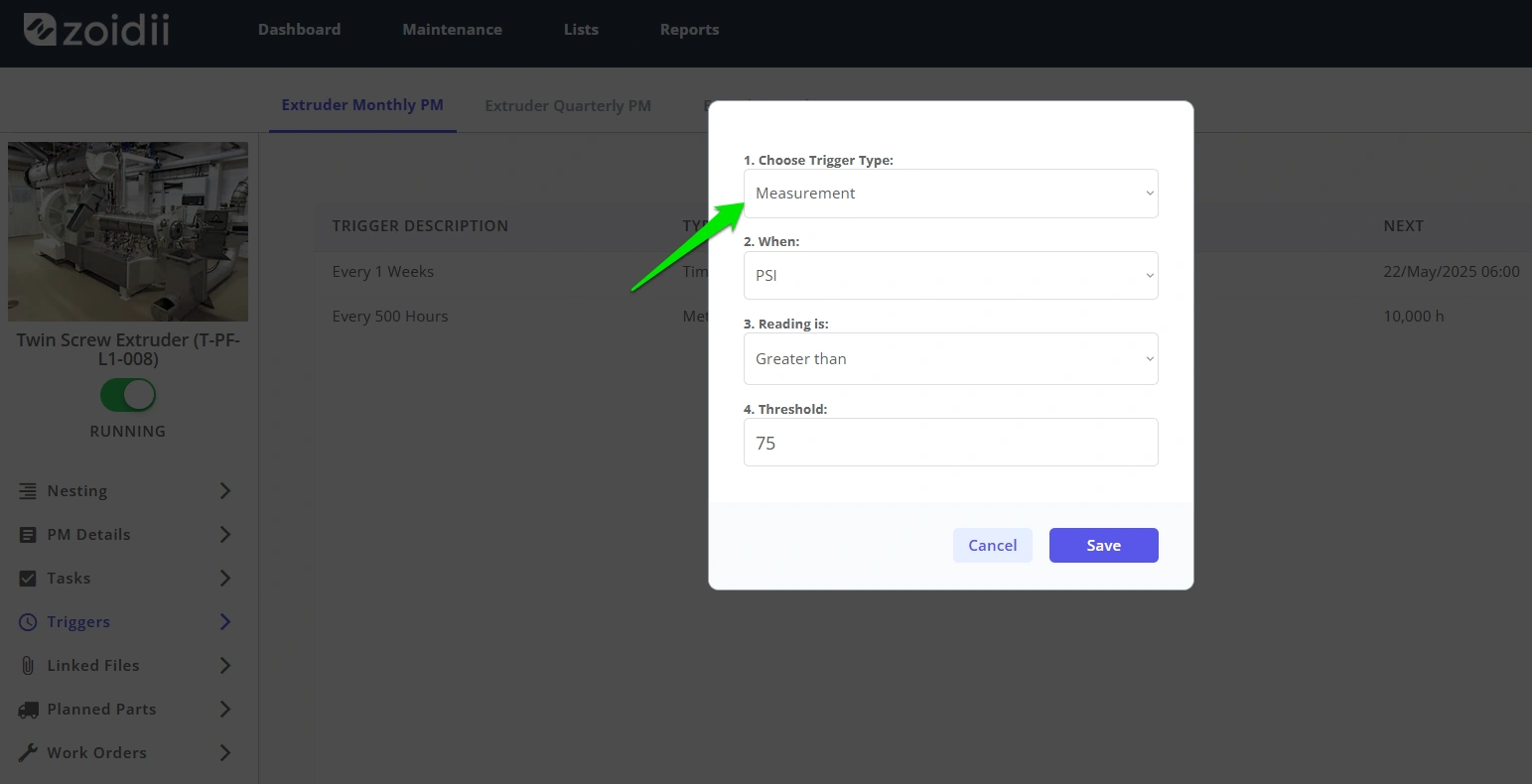
Condition-based preventive maintenance is a proactive approach to equipment maintenance that involves continuously monitoring its condition.
Integrating analytics, artificial intelligence in maintenance, and insights from a potential-failure curve (P-F curve) into the process can also provide insights into possible issues before they occur.
Beyond this, prescriptive maintenance aims to predict failures and recommend the most effective solutions.
Benefits of Condition-Based Maintenance
- Uses sensors and IoT to spot early warning signs
- Cuts emergency repair costs and downtime
- Let you act before failures happen
- Allows maintenance during planned downtime
- Extends equipment life by catching wear and tear early
- Reduces the need for costly replacements
What You’ll Need for Condition-Based Maintenance
- Investment in technology (sensors, IoT devices)
- Training for staff on new tools and systems
- Reliable process for monitoring equipment data
Building a Preventive Maintenance Program
Effective maintenance planning and strategy is key. Organizations that do not have a solid preventive maintenance plan and are not equipped with the infrastructure required for an advanced maintenance program.
Such advanced programs often rely heavily on condition-based maintenance and consider factors like the criticality of assets.
Step-by-Step Maintenance Strategy Development
It's often said that a world-class maintenance program is not a destination but a continuous process.
A comprehensive approach might also include specialized strategies, such as failure-finding maintenance, for identifying hidden issues, particularly in the maintenance of protective functions where failure is not immediately apparent.
For organizations looking to improve their strategies, our preventive maintenance guide offers insights into best practices and effective implementation strategies.
How to Level Up Your Preventive Maintenance
- Start with a simple time-based maintenance plan.
- Add meter-based PMs by tracking usage in your CMMS.
- For your most critical assets, add sensors to enable condition-based PMs.
Get More from Preventive Maintenance with Zoidii
Choosing the right preventive maintenance strategy helps you keep equipment running smoothly, reduce unplanned downtime, and manage costs effectively.
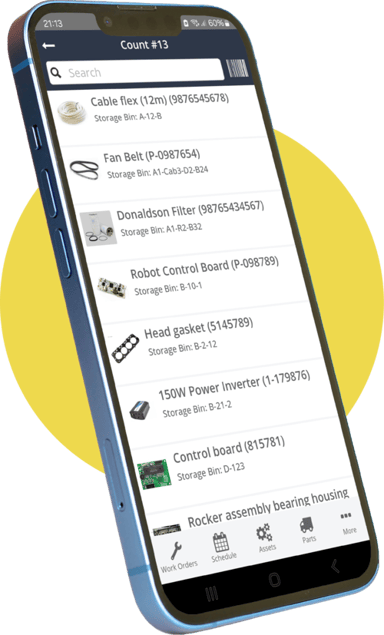
Whether your team is starting with time-based maintenance or you’re looking to add meter-based and condition-based approaches, the right tools and plan make all the difference.
If you’re ready to optimize your maintenance program or would like advice tailored to your specific operation, please contact us today. To see how Zoidii makes preventive maintenance simple and effective, explore our product here.