
In the world of maintenance and reliability, acronyms are everywhere. From CMMS to MTBF, from TPM to RCM, the industry is filled with jargon that, while valuable, can be overwhelming.
Whether you’re a seasoned maintenance manager, a reliability engineer, or new to asset management, understanding and effectively using these acronyms is crucial for clear communication, strategic planning, and operational excellence.
This guide offers an in-depth look at the most commonly used maintenance and reliability acronyms, organized by category, explained in plain language, and placed in a real-world context.
Using this guide, you and your team can improve communication and alignment, leading to a more confident and reassured approach to maintenance and reliability. We’ve also linked many of these acronyms if you want to read about them more in-depth.
Why Maintenance Acronyms Matter
Acronyms aren’t just industry buzzwords—they encapsulate complex systems, performance metrics, and methodologies into manageable shorthand. Here’s why they’re important:
- Clarity & Consistency: Everyone from technicians to executives needs to speak the same language.
- Efficiency: Communicating maintenance status or reliability goals is faster with standard terms.
- Standardization: Acronyms often align with global best practices (e.g., ISO, SMRP, NFPA).
- Compliance & Reporting: Many compliance frameworks use these acronyms explicitly in documentation.
Core System Acronyms
1. CMMS – Computerized Maintenance Management System
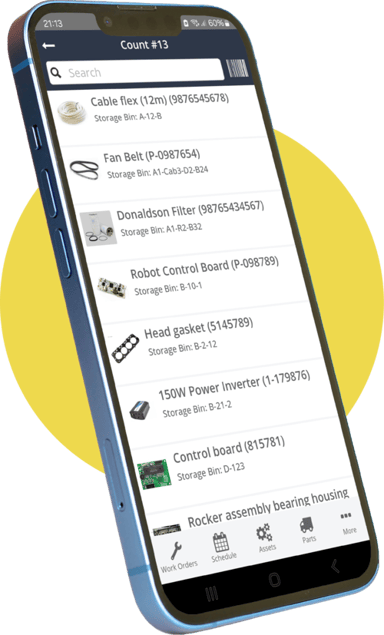
CMMS software helps organizations manage maintenance operations, including asset tracking, work orders, preventive maintenance scheduling, and reporting.Use Case: Schedule weekly HVAC inspections, track repair costs, and manage spare parts inventory.
2. EAM – Enterprise Asset Management
EAM systems are broader than CMMS and handle the entire lifecycle of physical assets across departments, integrating finance, procurement, and operations.Use Case: Managing capital assets from purchase to disposal across multiple facilities.
3. SCADA – Supervisory Control and Data Acquisition
SCADA systems monitor and control industrial equipment through data acquisition and human-machine interfaces (HMIs).Use Case: Real-time monitoring of manufacturing plant pumps, compressors, and utility systems.
4. IIoT – Industrial Internet of Things
The network of sensors and devices that collect and share data from industrial equipment for analytics and automation.Use Case: Using vibration sensors to trigger predictive maintenance alerts on rotating equipment.
Maintenance Strategy Acronyms
PM – Preventive Maintenance
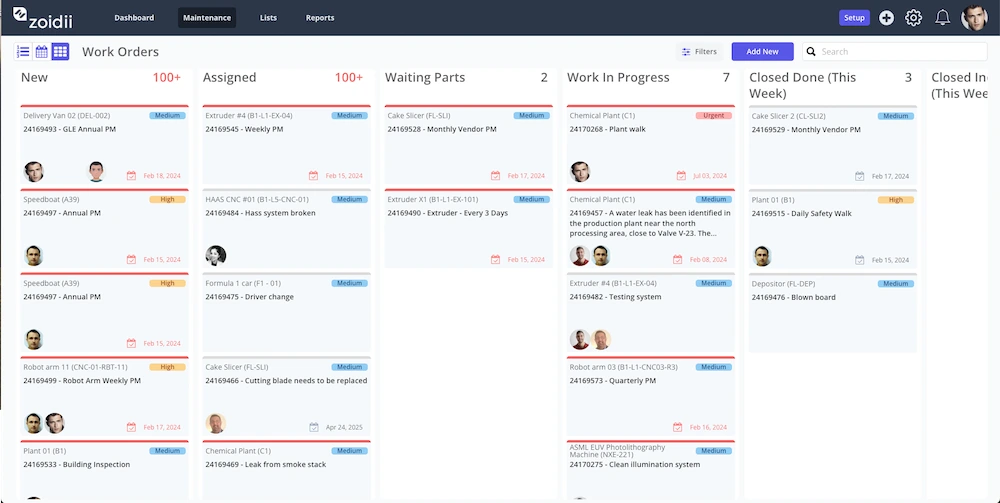
Scheduled maintenance tasks based on time or usage intervals to prevent equipment failure.Example: Changing air filters every 3 months, regardless of performance.
PdM – Predictive Maintenance
Uses real-time condition monitoring (e.g., vibration, thermal, oil analysis) to anticipate equipment failure.Example: Replacing a motor only when vibration thresholds exceed set limits.
CM – Corrective Maintenance
Reactive repairs after a failure occurs.Example: Fixing a conveyor belt that broke during operation.
BM – Breakdown Maintenance
A subset of corrective maintenance, where maintenance only occurs after total failure—usually unplanned and unscheduled.Example: Repairing a failed water pump that caused production downtime.
RCM – Reliability-Centered Maintenance
A structured process to determine the most effective maintenance strategy based on failure modes and their impact.Example: Applying RCM to critical medical equipment to balance cost and safety.
TPM – Total Productive Maintenance
A lean approach involving everyone in the organization (including operators) in maintaining equipment to improve productivity and reduce downtime.Key Pillars: Autonomous Maintenance, Kaizen, Training, Equipment Effectiveness.
PMO – Preventive Maintenance Optimization
A process that reviews and refines PM tasks to ensure they’re practical, necessary, and efficient.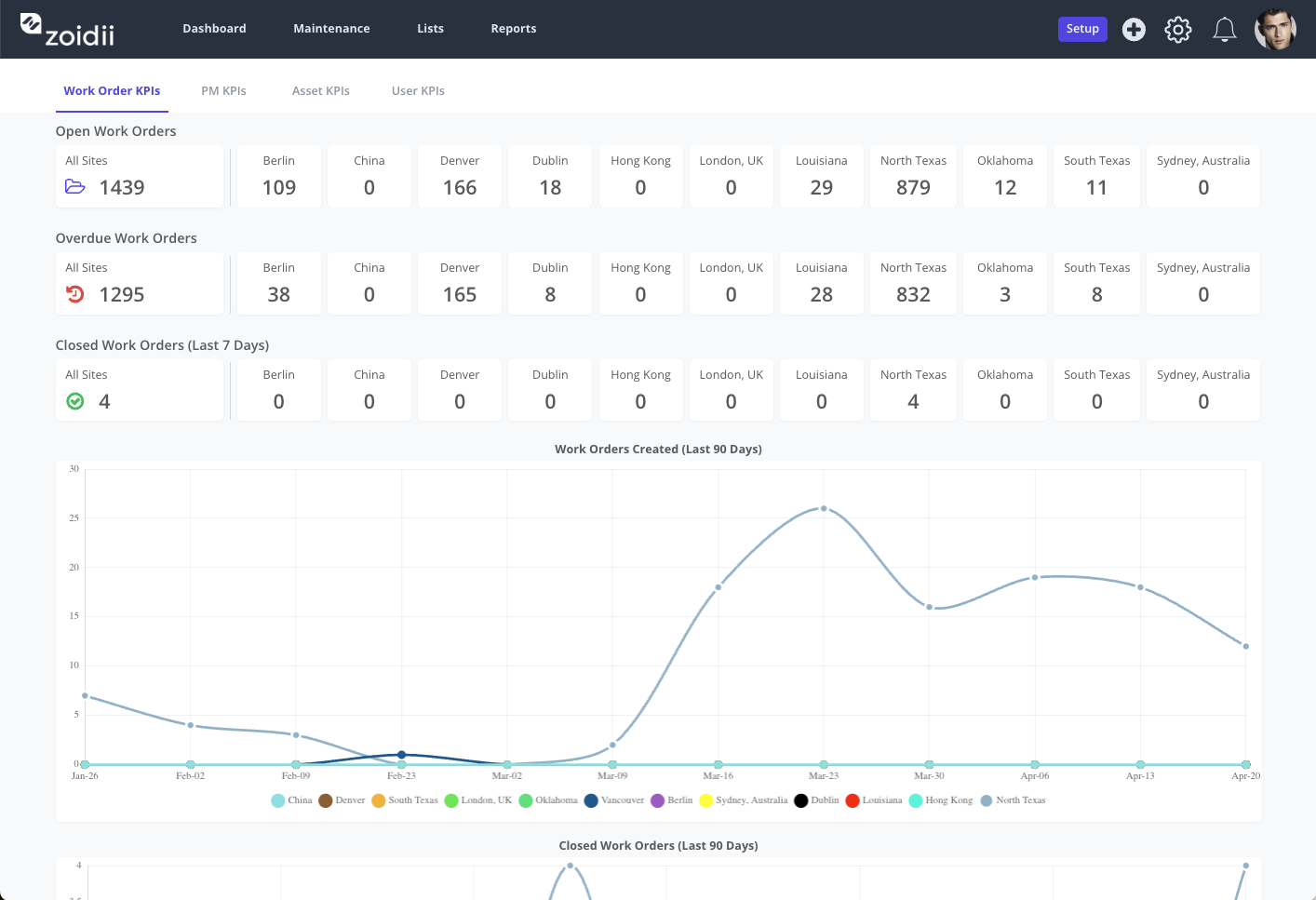
Key Performance Metrics (KPIs) Acronyms
MTTR – Mean Time to Repair
The average time it takes to repair and restore a failed asset to full functionality.Formula: MTTR = Total Downtime / Number of Repairs
MTBF – Mean Time Between Failures
The average time between two consecutive failures of a system or component.Formula: MTBF = Total Operating Time / Number of Failures
MTTF – Mean Time to Failure
Used for non-repairable systems or components. Represents the average time until the first failure.OEE – Overall Equipment Effectiveness
A key measure of productivity that combines availability, performance, and quality.Formula: OEE = Availability × Performance × Quality
KPI – Key Performance Indicator
Quantifiable measures are used to evaluate the success of a maintenance strategy or operation.Examples:
- PM Compliance Rate
- Work Order Backlog
- Downtime per Equipment Type
MTBR – Mean Time Between Repairs
Specifically, it measures the time between necessary repairs, excluding maintenance that doesn’t fix a failure (like inspections).
Failure & Analysis Acronyms
FMEA – Failure Modes and Effects Analysis
A proactive tool to identify all potential failure modes of a process or component and their consequences.Example: Using FMEA for a power supply system to assess risks and mitigation strategies.
RCA – Root Cause Analysis
A systematic and structured approach to identify and mitigate potential failure modes within a system, product, or process.Tools: 5 Whys, Fishbone Diagrams
FRACAS – Failure Reporting, Analysis, and Corrective Action System
A closed-loop system for tracking, investigating, and correcting failures in a structured manner.FTA – Fault Tree Analysis
A graphical tool used to map out failure paths and contributing causes to a specific top-level failure event.Work Management Acronyms
WO – Work Order
A formal task or job is issued to complete maintenance work, including scope, resources, parts, and due date.SM – Scheduled Maintenance
All maintenance activities are planned and included in a maintenance calendar or backlog.EM – Emergency Maintenance
Urgent, unplanned tasks must be addressed immediately due to safety, legal, or operational risks.WOA – Work Order Aging
A metric tracking how long open work orders remain unresolved—useful for backlog analysis and efficiency monitoring.LOTO – Lockout/Tagout
A safety procedure ensuring that dangerous machines are properly shut off and not started up again before maintenance is completed.Inventory & Spare Parts Acronyms
MM – Materials Management
Refers to the planning, organizing, and controlling materials, parts, and supplies used in maintenance operations.MRP – Material Requirements Planning
A system to manage manufacturing processes, including parts forecasting and procurement for maintenance.BOM – Bill of Materials
A comprehensive list of parts, materials, and components required for maintenance or construction of equipment.ROA – Return on Assets
A financial performance metric indicates how effectively assets are being used to generate income.Formula: ROA = Net Income / Total Assets
Regulatory & Safety Acronyms
OSHA – Occupational Safety and Health Administration
A U.S. agency responsible for ensuring workplace safety and health standards are met.EPA – Environmental Protection Agency
Oversees regulations related to emissions, waste disposal, and environmental impact—often tied to maintenance of HVAC, generators, and chemicals.NFPA – National Fire Protection Association
Creates codes and standards related to fire safety and equipment, including NFPA 70 (NEC) and NFPA 70E.ISO – International Organization for Standardization
Sets international standards across industries. ISO 55000 pertains to asset management; ISO 9001 is for quality.Lean, Six Sigma, and Industry 4.0 Acronyms
5S – Sort, Set in Order, Shine, Standardize, Sustain
A workplace organization method used to improve efficiency and safety.DMAIC – Define, Measure, Analyze, Improve, Control
The core process for Six Sigma projects aimed at improving quality and reducing variation.AI – Artificial Intelligence
Used in maintenance to analyze patterns, predict failures, and optimize asset lifecycles. ML – Machine Learning
A subset of AI where algorithms learn from historical data to make predictions, especially in PdM.
How to Use This Acronym Knowledge Practically
As a Maintenance or Reliability Manager, it’s essential to:
- Standardize Language: Use consistent acronyms across your CMMS, SOPs, and team communications.
- Train Your Team: Ensure everyone, from new hires to veterans, understands these terms.
- Align with Strategy: Choose KPIs and systems (like CMMS, PdM, or TPM) that reflect your plant or facility’s goals.
- Benchmark and Improve: Use metrics like OEE and MTTR to identify areas of improvement.
- Communicate with Stakeholders: Use metrics and acronyms to speak the language of finance, operations, and leadership.
Conclusion
Maintenance and reliability aren’t just about fixing things—they’re about creating efficient, data-driven, sustainable systems. A solid understanding of key acronyms will improve communication, credibility, and strategic decision-making as the industry evolves toward digitization and predictive technologies.
Whether you’re implementing a new CMMS, refining your preventive maintenance program, or tracking MTBF across assets, speaking the maintenance language is essential.
Bookmark this guide, share it with your team, and ensure your terminology toolbox is as sharp as your technical skills. Because in this field, clarity isn’t just power—it’s performance.